- SPECIALIST ORTHOPAEDIC SURGEON | MELBOURNE, VIC | ALBURY, NSW | MORNINGTON, VIC |
- 03 9421 6133
- Melbourne & Mornington VIC |
- Albury, NSW
Cooled Radiofrequency Ablation (RFA) is a minimally invasive, non-surgical procedure that may help relieve persistent knee pain in people with osteoarthritis. It is often considered when other non-operative treatments such as physiotherapy, pain relief medications, or joint injections have not provided sufficient relief, or when a patient is not yet ready for, or suitable for, knee replacement surgery.
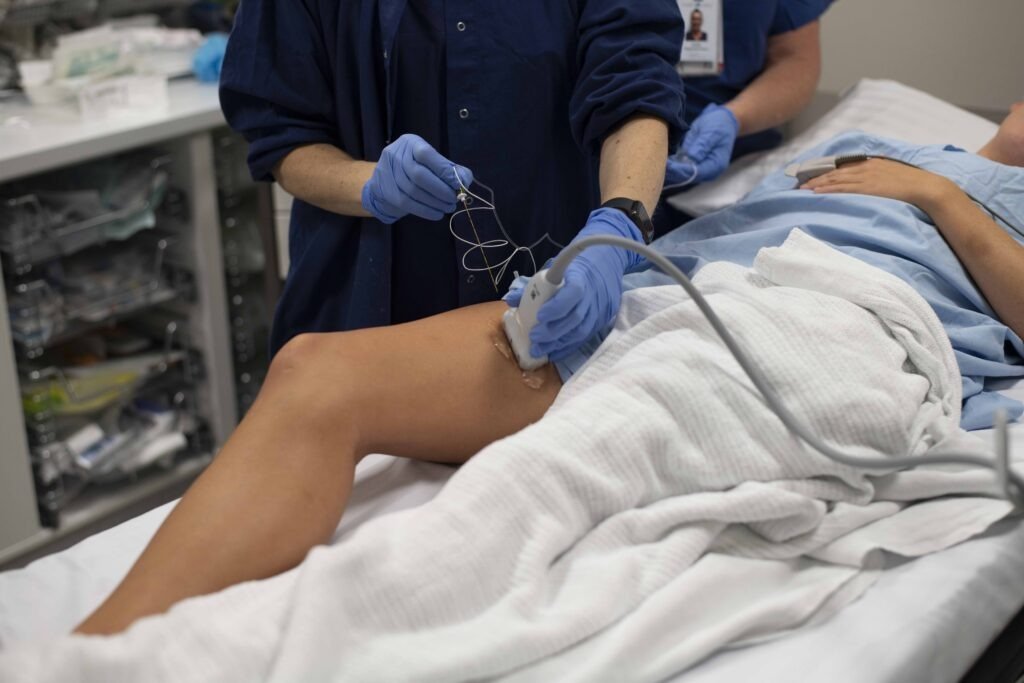
The procedure is typically performed in a hospital or specialist theatre under sterile conditions, using local anaesthetic or light sedation to ensure comfort. Guided by real-time imaging, Dr Hockings targets specific nerve branches that transmit pain signals from the knee joint.
While RFA does not cure arthritis, it can form part of a broader pain management strategy aimed at reducing discomfort, improving mobility, and supporting a better quality of life.
Radiofrequency ablation (RFA) works by disrupting the sensory nerve pathways that transmit pain signals from the knee joint to the brain. The procedure specifically targets the genicular nerves, which are responsible for carrying pain messages from within the knee. Because these nerves are the focus of treatment, the procedure is also known as genicular nerve ablation.
In individuals with knee osteoarthritis, these sensory nerves can become overactive due to ongoing inflammation, cartilage wear, and changes in joint mechanics. This can result in persistent, hard-to-manage pain, even after trying physiotherapy, medications, or injections.
During the procedure, Dr Hockings uses real-time imaging (typically X-ray or ultrasound) to guide the placement of a thin, needle-like probe near the genicular nerves. Once accurately positioned, the tip of the probe delivers a controlled dose of radiofrequency energy, which generates heat to create a small lesion on the nerve. This temporarily interrupts the nerve’s ability to transmit pain signals.
Importantly, RFA does not change the structure of the joint itself. Instead, it helps reduce pain perception, allowing for improved mobility, greater comfort, and the ability to participate more easily in daily activities, all without the need for incisions, stitches, or surgical recovery.
In addition to cooled RFA COOLIEF®, other radiofrequency systems that could also be used in clinical practice include:
Dr Hockings will consider your individual circumstances, including your pain pattern, imaging findings, previous treatment responses, and overall health, to recommend the most appropriate technique for your knee pain management.
Before proceeding, Dr Hockings will conduct a thorough consultation to ensure RFA is appropriate for you. This will include:
Here’s a step-by-step overview of what to expect:
You can generally return to light activities within a day or two, and resume normal routines shortly thereafter. While individual responses vary, some people begin noticing improvements in pain and mobility within 1–2 weeks.
Dr Hockings will provide detailed aftercare instructions and follow-up to monitor your response to treatment and help you get the most out of your recovery.
Most patients begin to notice pain relief within one to two weeks following the procedure. This improvement can allow for greater comfort with walking, exercise, and daily tasks. In many cases, the effects of radiofrequency ablation may last between 6 and 12 months, and in some individuals, even longer. Since the treated sensory nerves can gradually regenerate over time, pain may eventually return. If this happens however, the procedure can often be safely repeated.
It’s important to note that the degree of pain relief varies from person to person. Some individuals experience a significant reduction in pain and improvement in mobility, while others may find the benefits more modest. Dr Hockings will discuss what outcomes you may reasonably expect based on your condition, imaging results, and response to prior treatment.
Although RFA is generally safe and well-tolerated, it’s important to be aware of the following:
Dr Hockings will explain the potential risks and expected outcomes and whether RFA is suitable based on your imaging results, symptoms, and medical history.

If you’re experiencing ongoing pain, stiffness, or reduced movement that is affecting your daily activities or quality of life, a thorough orthopaedic assessment can help determine the cause and guide the most appropriate treatment options for your situation.