Labral tears or SLAP lesions

Injuries to the shoulder's stabilising cartilage that can cause pain, clicking, or instability

Your shoulder joint is surrounded by a ring of cartilage called the labrum. It helps to stabilise the shoulder by deepening the socket and keeping the ball of your upper arm bone in place. It also serves as the attachment point for several important structures, including the ligaments and one of your biceps tendons.

If this cartilage is torn, whether from an injury, repeated overuse, or wear over time, it can lead to a range of symptoms, including pain, catching or clicking in the joint, weakness, or even a feeling that your shoulder is loose or about to dislocate.
There are different types of labral tears, two common ones include:
These injuries can affect people of any age but are especially common in athletes who use their arms overhead (such as swimmers or throwers), as well as people who have had a shoulder dislocation or trauma.

What causes labral tears?

A labral tear can occur suddenly from a single injury or gradually over time due to repetitive strain. Some common causes include:
In many cases, people can’t recall a specific incident but notice increasing pain, weakness, or a clicking sensation over time.

What symptoms should I look out for?

A torn labrum can cause a variety of symptoms, depending on the location and severity of the tear. These may include:
SLAP tears can sometimes mimic other shoulder conditions, such as biceps problems or rotator cuff injuries, which is why a careful assessment is important.

How are labral tears diagnosed?

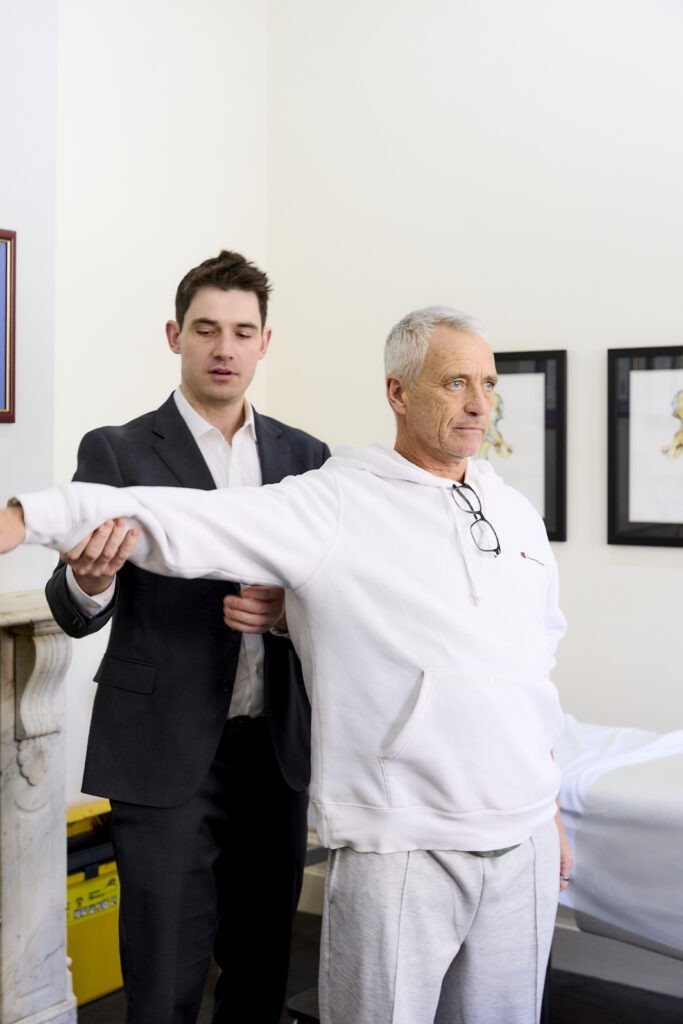
Dr Jason Hockings will start by discussing your symptoms, medical history, and how the injury happened (if known). He’ll then perform a physical examination to assess your shoulder’s range of motion, strength, and stability.
To confirm the diagnosis, you may be referred for imaging tests such as:
In some cases, the diagnosis is confirmed during an arthroscopy, a minimally invasive procedure using a small camera to look directly inside the joint.

Can a labral tear heal without surgery?

Some labral tears, especially small or degenerative ones, may settle with non-surgical treatment. If your shoulder is stable and your symptoms are manageable, Dr Hockings or your GP may recommend a period of physiotherapy and activity modification before considering surgery. If the tear is large, causing instability, or not improving with time however, surgical repair may be the best option, particularly for younger patients or those who wish to return to sport.

What are the non-surgical treatment options?

For milder cases, or when surgery isn’t needed, treatment may include:
Your response to non-surgical treatment will help guide the next steps in your care.

When is surgery recommended?

Dr Hockings may recommend surgery if:
The goal of surgery is to reattach the torn labrum and restore shoulder stability.

If you’re experiencing ongoing pain, stiffness, or reduced movement that is affecting your daily activities or quality of life, a thorough orthopaedic assessment can help determine the cause and guide the most appropriate treatment options for your situation.