- SPECIALIST ORTHOPAEDIC SURGEON | MELBOURNE, VIC | ALBURY, NSW | MORNINGTON, VIC |
- 03 9421 6133
- Melbourne & Mornington VIC |
- Albury, NSW
Anatomic shoulder replacement, (also known as total shoulder arthroplasty or anatomical total shoulder replacement) is a surgical procedure designed to replicate the natural structure and movement of your shoulder joint. It is typically recommended when the shoulder has become painful and stiff due to advanced osteoarthritis, rheumatoid arthritis, or certain types of fractures, but the rotator cuff muscles remain healthy and functional.
Unlike reverse shoulder replacement, which alters the mechanics of the joint, an anatomic shoulder replacement preserves the native orientation of the ball-and-socket design: the humeral head (ball) is replaced with a smooth metal implant, and the glenoid (socket) is fitted with a specially shaped polyethylene component. This allows the rotator cuff to continue controlling movement and stabilising the shoulder.

The following sections provide a detailed overview of the anatomic shoulder replacement journey with Dr Jason Hockings, including key symptoms, surgical details, recovery process, and how your care is personalised at each stage.

You may benefit from anatomic shoulder replacement surgery if you experience:
Dr Jason Hockings will assess whether anatomic shoulder replacement is suitable for you based on:
In these situations, reverse shoulder replacement may offer a better outcome.
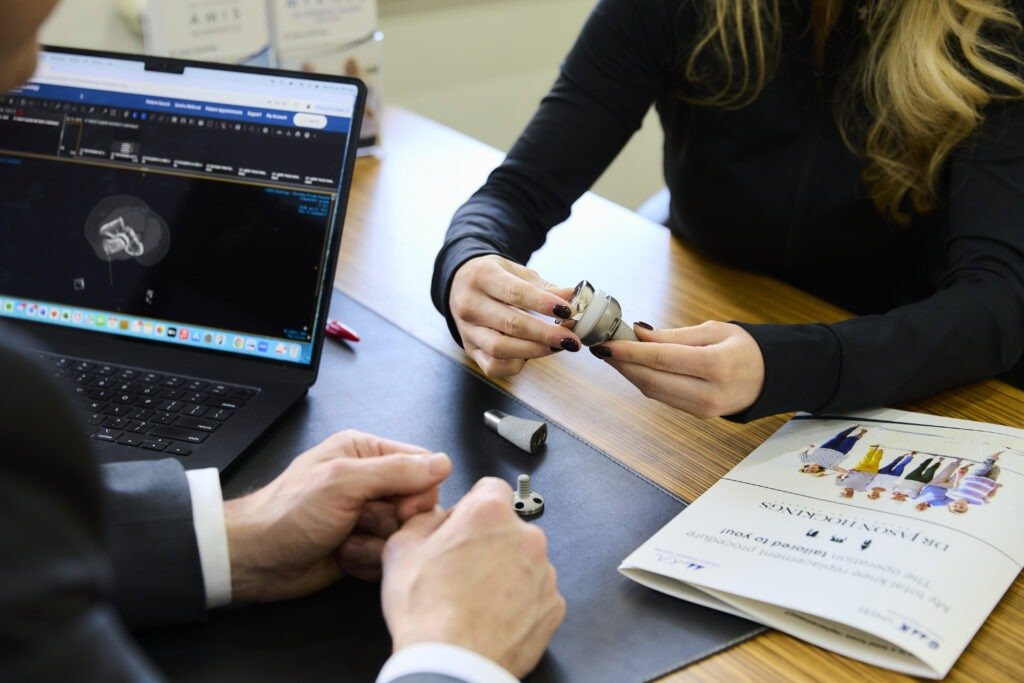
The implants used in anatomical shoulder replacement include:
Dr Hockings selects implant systems that offer:

Your individual progress will depend on factors such as the underlying condition, surgical findings, and your adherence to physiotherapy.
If you’re experiencing ongoing pain, stiffness, or reduced movement that is affecting your daily activities or quality of life, a thorough orthopaedic assessment can help determine the cause and guide the most appropriate treatment options for your situation.