- SPECIALIST ORTHOPAEDIC SURGEON | MELBOURNE, VIC | ALBURY, NSW | MORNINGTON, VIC |
- 03 9421 6133
- Melbourne & Mornington VIC |
- Albury, NSW
Knee arthroscopy is a minimally invasive surgical technique used to diagnose and treat a wide range of conditions within the knee joint. It involves inserting a small camera, called an arthroscope, through a tiny incision to provide a clear view of the internal structures of your knee. Additional small instruments can be inserted through separate incisions to carry out precise repairs or remove damaged tissue.
Because the procedure is performed through small incisions, knee arthroscopy is often referred to as ‘keyhole surgery.’ It allows your surgeon to address specific issues affecting the cartilage, ligaments, meniscus, or soft tissue without the need for a large open incision. This typically results in less pain, faster recovery, and lower risk of complications compared to traditional open surgery.
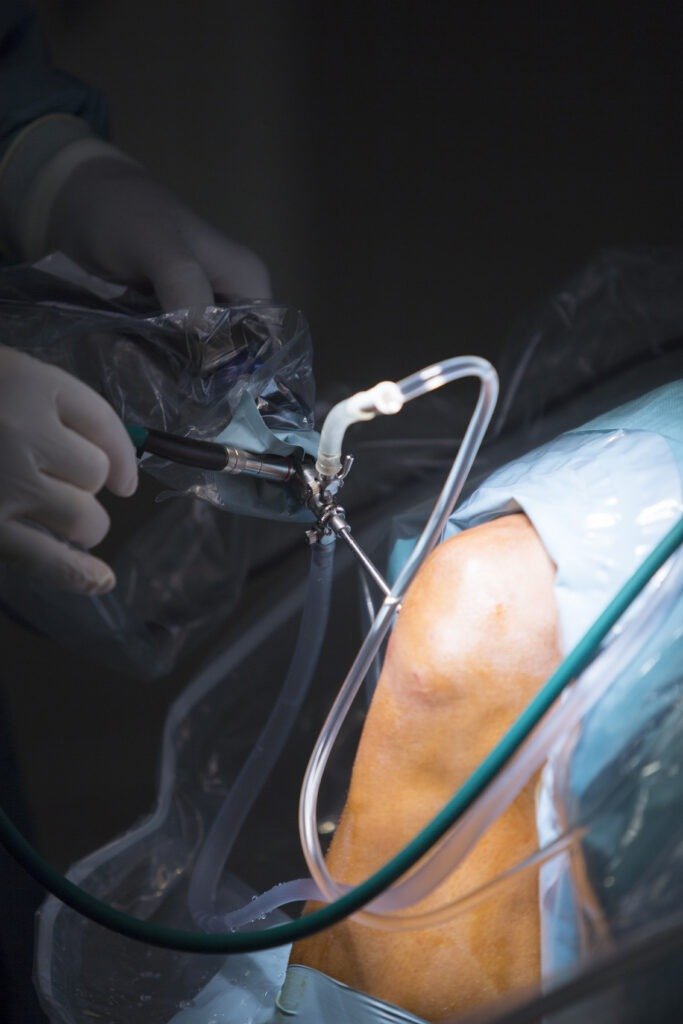
Knee arthroscopy may be recommended when symptoms such as persistent pain, swelling, catching, or instability do not improve with non-surgical treatment. It can be used both to confirm a diagnosis and to carry out targeted surgical repair during the same procedure. Common procedures performed arthroscopically include meniscus repair or removal (meniscectomy), anterior cruciate ligament (ACL) reconstruction, and reconstruction of the posterolateral (PFL) structures, among others.
If you’re experiencing ongoing pain, stiffness, or reduced movement that is affecting your daily activities or quality of life, a thorough orthopaedic assessment can help determine the cause and guide the most appropriate treatment options for your situation.