Meniscectomy

Relieving pain and restoring knee function by removing damaged meniscal tissue

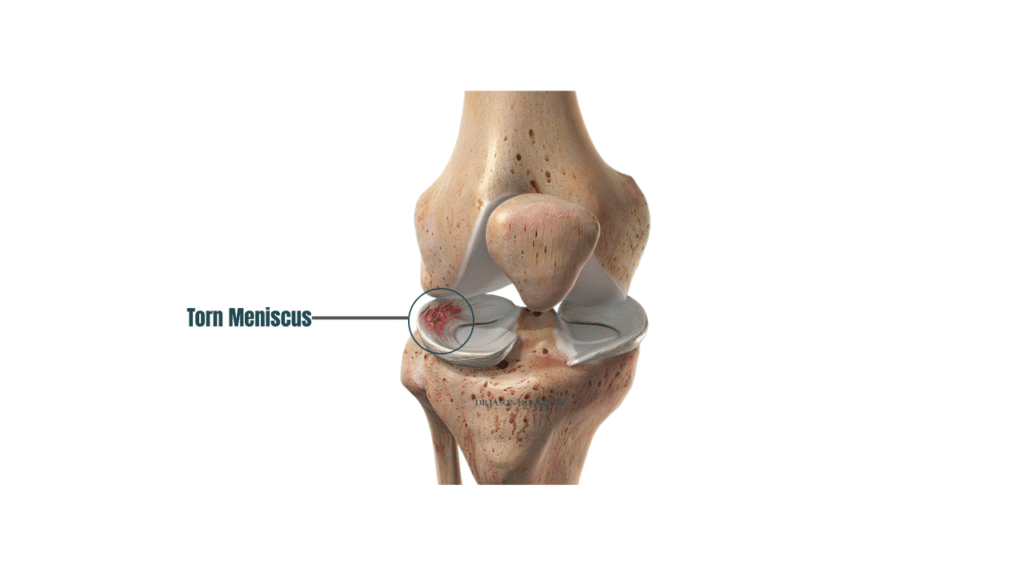
The meniscus is a vital, crescent-shaped piece of cartilage that cushions and stabilises your knee joint. Each knee has two menisci, the medial (inner) and lateral (outer), which help absorb shock, guide movement, and protect the underlying joint surfaces. When the meniscus is torn, either through injury or wear and tear, it can cause pain, swelling, clicking, or a catching sensation in the knee.

A meniscectomy is a surgical procedure used to treat meniscal tears by removing the damaged or unstable tissue. In most cases, a partial meniscectomy is performed, where only the torn section is trimmed, and the healthy cartilage is preserved. This approach aims to relieve symptoms while maintaining as much of the natural meniscus as possible. A total meniscectomy, which involves removing the entire meniscus, is rarely performed due to its association with higher risks of joint degeneration and arthritis over time.
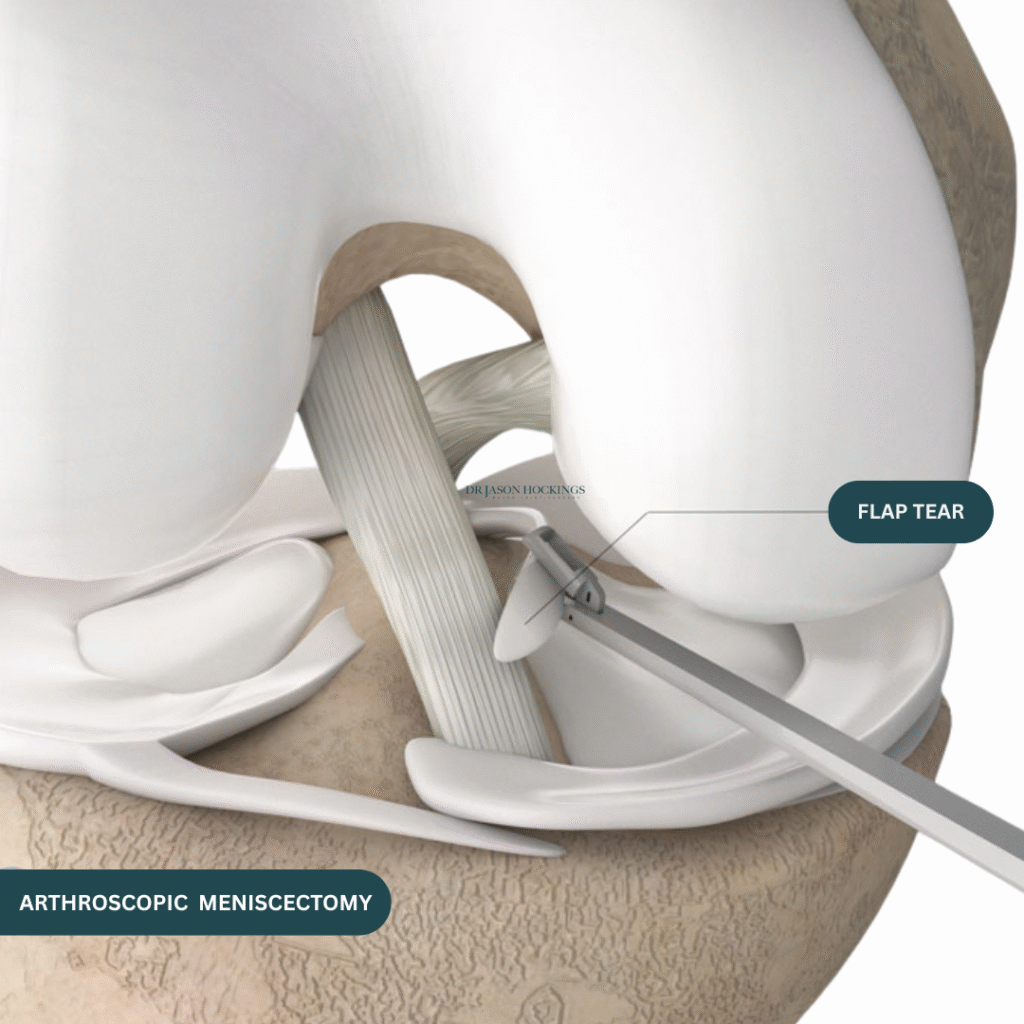
Dr Jason Hockings performs arthroscopic (keyhole) meniscectomy using advanced techniques and a personalised approach, ensuring the procedure is appropriate for your specific type of tear, age, activity level, and long-term joint health. This page will help you understand what’s involved in a partial meniscectomy, when it’s recommended, what to expect during recovery, and how it fits into the broader treatment plan for knee injuries.

Understanding meniscus tears

Meniscus injuries often occur due to twisting movements, deep bending, or direct trauma, frequently during sporting activities. In older individuals, tears may arise more gradually due to wear and degeneration.
Whether a meniscus tear can be repaired depends on its type, location, and severity:
Tears more likely to be repairable:
Tears less likely to be repairable:
Dr Hockings will review your MRI scans and assess your knee function to determine whether repair is the most suitable option.

What does meniscectomy surgery involve?

Meniscectomy is performed as a minimally invasive keyhole procedure using arthroscopy. Under general or spinal anaesthesia, Dr Hockings inserts a small camera (arthroscope) and fine instruments through tiny incisions around the knee.
During the procedure:
The procedure usually takes under 45 minutes and is done as a day surgery. Most patients go home the same day with a clear rehabilitation plan in place.

Recovery and rehabilitation after meniscectomy

Recovery after a partial meniscectomy is typically quicker than meniscus repair because there is no need to protect healing tissue. Most people experience rapid improvement in symptoms within days to weeks.
Typical recovery includes:
You may experience mild swelling or discomfort initially, but this usually resolves with rest, elevation, and appropriate pain relief. Dr Hockings and your physiotherapy team will guide your rehabilitation to ensure a safe return to your usual activities.

Benefits of a partial meniscectomy

When meniscus repair isn’t suitable, partial meniscectomy can offer important benefits, including:
While it doesn’t restore the meniscus, partial removal may allow you to regain comfort and movement when repair is not possible.

Are there risks with meniscectomy surgery?

As with any surgery, meniscectomy carries some risks. Although uncommon, these may include:
Dr Hockings will explain these risks and whether meniscectomy is the most appropriate and lowest-risk option for your specific condition.

Is a meniscectomy right for you?

Meniscectomy may be suitable if you:
During your consultation, Dr Jason Hockings will review your symptoms, physical examination, and MRI imaging to determine whether meniscectomy is the most effective treatment for your needs. His goal is always to preserve knee health where possible while ensuring the best long-term outcome. Dr Hockings will also perform a thorough clinical examination, review your imaging, and discuss your goals to help determine the best treatment pathway, whether that involves repair or another option such as partial meniscectomy.

If you’re experiencing ongoing pain, stiffness, or reduced movement that is affecting your daily activities or quality of life, a thorough orthopaedic assessment can help determine the cause and guide the most appropriate treatment options for your situation.