- SPECIALIST ORTHOPAEDIC SURGEON | MELBOURNE, VIC | ALBURY, NSW | MORNINGTON, VIC |
- 03 9421 6133
- Melbourne & Mornington VIC |
- Albury, NSW
If you’re considering hip replacement surgery, you may have heard about the anterior approach, a modern surgical technique that accesses the hip joint from the front of the body, avoiding major muscle groups that are usually involved in traditional techniques. By working between the natural spaces in the muscles, rather than cutting through them, this method can help preserve important structures that support walking, balance, and recovery.
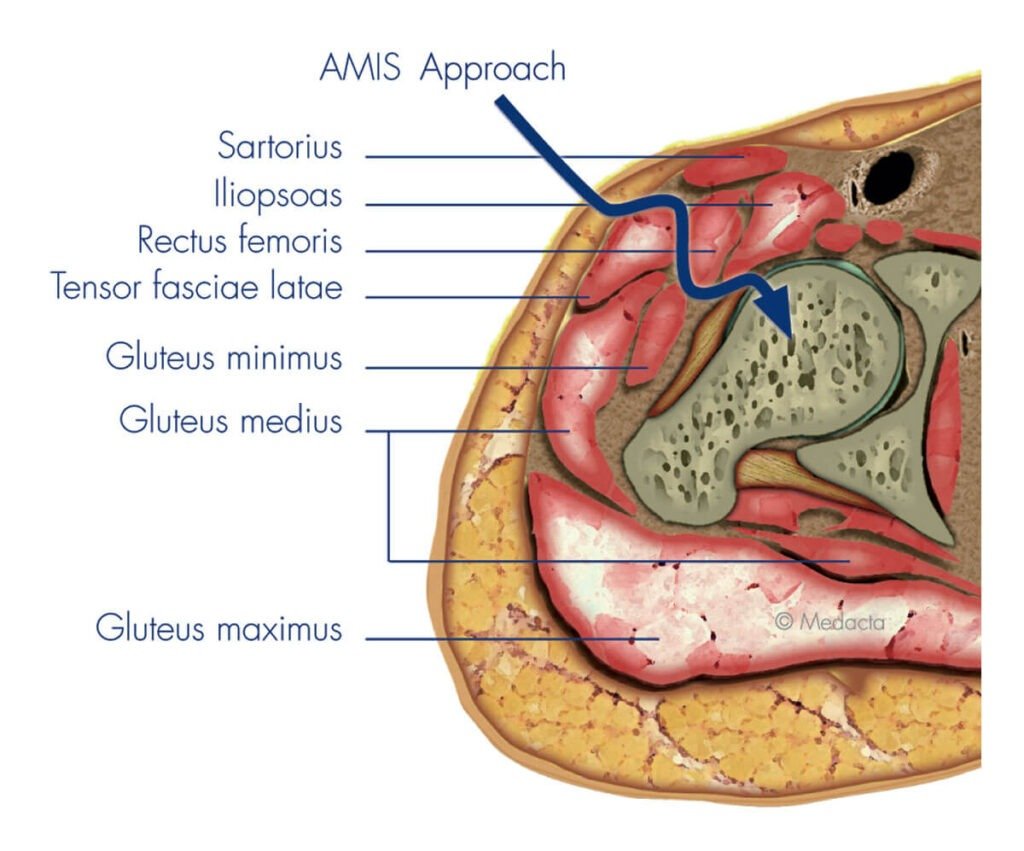
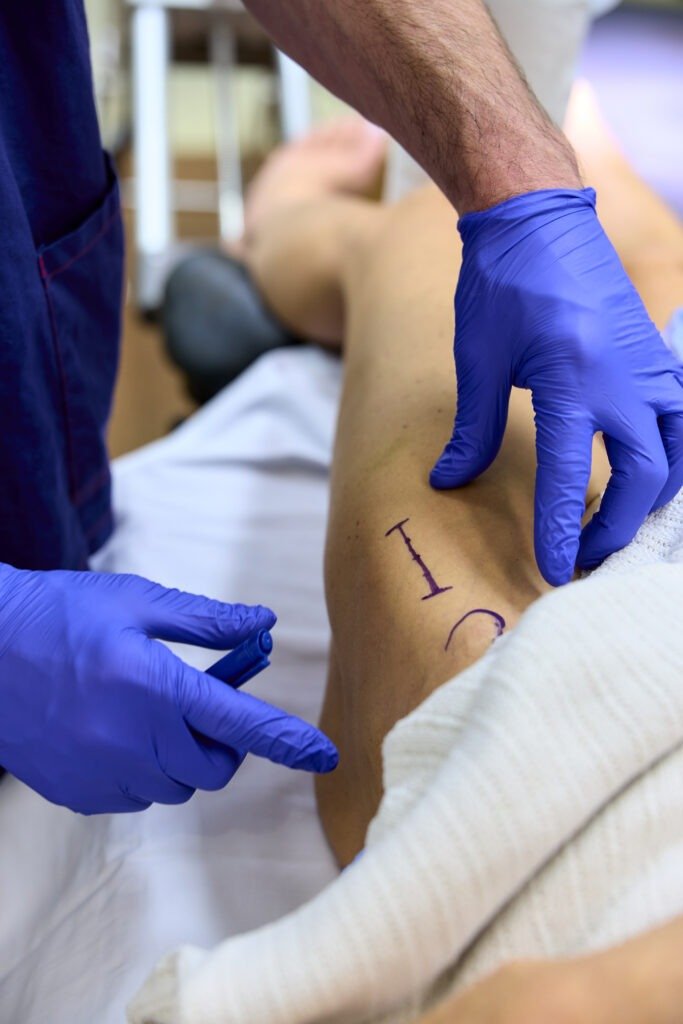
Where appropriate, Dr Hockings may also use a bikini incision, with the AMIS approach, a refined technique where the surgical cut is made along the natural skin crease at the front of the hip, resulting in a less visible scar once healed. Also, to support accuracy and consistency during surgery, he may also use advanced planning and intraoperative tools. These technologies work together to support a well-aligned, stable outcome tailored to your individual anatomy.
Anterior approach total hip replacement, also know as DAA or AMIS, is a surgical technique used to perform total hip replacement through an incision at the front of the hip. This method allows the surgeon to access the joint by moving between muscles rather than cutting through them. It’s considered a muscle-sparing approach, as it preserves key structures such as the gluteal and rotator muscles, which are important for hip stability and mobility.
The anterior approach is performed with the patient lying on their back (supine), which allows for easier access to both hips if needed, and helps maintain accurate positioning during the procedure. For many patients, this can lead to a smoother and more confident recovery.
Dr Hockings performs the anterior approach in the majority of his hip replacement cases and will recommend the most appropriate surgical method based on your individual needs.
The direct anterior approach for total hip replacement surgery offers several benefits compared to traditional surgical approaches. One notable advantage is the potential for a faster recovery and shorter hospital stay. This is attributed to the fact that the surgery is performed through a smaller incision at the front of the hip, avoiding disruption of key muscles and tendons. The approach allows for a more tissue-sparing technique, reducing trauma to surrounding structures and minimising postoperative pain. Patients undergoing direct anterior hip replacement often experience improved early postoperative mobility and reduced muscle damage, contributing to a quicker return to activities of daily living. Additionally, the reduced muscle trauma may lead to a lower risk of dislocation after surgery. While not suitable for all patients, the direct anterior approach represents an innovative and minimally invasive option for total hip replacement, providing potential advantages in terms of recovery time, postoperative pain, and overall patient satisfaction.
It’s important to remember that every surgical technique has risks and benefits. Dr Hockings will explain these in detail and help you decide whether the anterior approach is right for you.
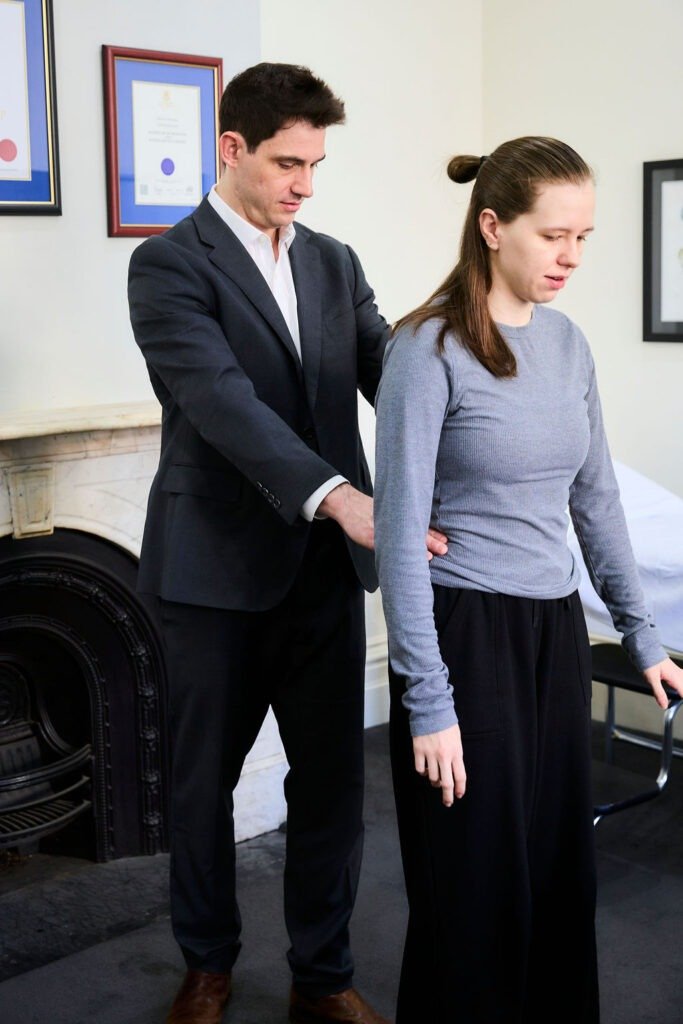
MyHip pre-operative planning software is used to map out the surgery in advance, helping ensure the prosthesis is well-suited to your anatomy.

If you’re experiencing ongoing pain, stiffness, or reduced movement that is affecting your daily activities or quality of life, a thorough orthopaedic assessment can help determine the cause and guide the most appropriate treatment options for your situation.