- SPECIALIST ORTHOPAEDIC SURGEON | MELBOURNE, VIC | ALBURY, NSW | MORNINGTON, VIC |
- 03 9421 6133
- Melbourne & Mornington VIC |
- Albury, NSW

Total hip replacement surgery is a highly effective procedure that removes the damaged parts of the hip joint and replaces them with smooth, artificial components. The aim is to reduce pain, restore function, and improve your quality of life.
The information here is designed to help you understand everything involved in hip replacement surgery, including symptoms to look out for, how the procedure works, what recovery involves, and how Dr Jason Hockings personalises care based on your needs.
For many patients, the improvement in comfort and mobility allows them to regain independence and participate more fully in work, family life, and recreational activities.
The hip is a ball-and-socket joint that plays a major role in weight-bearing and mobility. When the smooth cartilage that lines the joint wears away, the bones can start to rub against each other. This often leads to:
Symptoms may progress gradually over time, sometimes becoming more noticeable after periods of rest or increased activity.
Dr Hockings takes a considered, individualised approach to each patient. Not everyone with hip pain requires surgery, and many people benefit from non-surgical management for a period of time. If imaging confirms advanced joint damage and you are finding that pain or stiffness is interfering with your quality of life, hip replacement may be an appropriate next step.
During your consultation, Dr Hockings will assess your condition, review your medical imaging, and discuss whether a total hip replacement may help you move more comfortably and confidently again.
Hip arthritis often develops slowly, and its early symptoms are sometimes mistaken for muscle strain, back issues, or simple fatigue. Over time, as the joint becomes more worn and inflamed, the discomfort tends to become more persistent and starts interfering with everyday activities.
The most common form is osteoarthritis, but symptoms may also arise from rheumatoid arthritis, avascular necrosis, or past injury to the joint. While the underlying causes differ, the signs that suggest hip arthritis are often similar.
Symptoms that may indicate arthritis of the hip:
This discomfort is usually felt deep in the joint and may radiate toward the knee. It often worsens with activity and may ease with rest in the early stages.
The hip may feel tight or restricted, particularly after rest or when first getting up in the morning.
Movements such as bending, rotating the leg, or tying shoelaces may become harder over time.
As the pain increases, you may find yourself unconsciously adjusting how you walk to minimise discomfort.
These may be signs that the smooth cartilage surface of the joint has worn down.
Activities such as standing, walking long distances, climbing stairs, or carrying groceries may become more difficult.
Some patients are surprised to learn that arthritis in the hip can cause pain referred to other areas, including the front of the thigh or even the knee. This overlap can sometimes make diagnosis less straightforward without imaging.
If you’re noticing several of these symptoms, particularly if they’re affecting your ability to stay active, it may be a sign of underlying joint degeneration.
Total hip replacement surgery is generally recommended when the hip joint has become so damaged that it significantly affects your comfort, mobility, or ability to participate in daily life. It is not typically a first step in treatment but may be considered when non-surgical options such as physiotherapy, weight management, anti-inflammatory medications, and joint injections no longer provide enough relief.
Whether you are a suitable candidate for surgery depends on a combination of clinical findings, imaging, and how much your symptoms are impacting your everyday function.
For people with significant arthritis affecting both hips, Dr Jason Hockings may discuss the option of bilateral hip replacement. This involves replacing both hip joints, either during the same operation (simultaneous) or in two separate procedures performed months apart (staged).
A simultaneous bilateral hip replacement may be suitable for individuals who are medically fit, highly motivated for rehabilitation, and have appropriate support at home. Potential advantages can include a single hospital stay, one anaesthetic, and a unified recovery period.
In some cases, a staged approach, where one hip is replaced and the second surgery is performed after recovery from the first, may be safer and more practical. This allows one leg to support mobility, balance, and independence during early rehabilitation.
Because recovery from bilateral surgery can be more physically demanding in the initial weeks, careful assessment is essential. Dr Hockings will consider your overall health, mobility, home environment, and personal goals before recommending whether a simultaneous or staged approach is the most appropriate option for your circumstances.
Dr Hockings will take steps to minimise your surgical risk, including enhanced recovery protocols, prophylactic antibiotics, and blood clot prevention measures.
Although total hip replacement can offer significant pain relief and improved mobility, it is not appropriate for every patient. In some cases, alternative treatments may be more suitable, or surgery may need to be delayed until certain risks are addressed. Understanding when hip replacement may not be the best option is just as important as knowing when it is.
It is also important to have realistic expectations. While hip replacement can significantly reduce pain and improve function, it may not fully restore the joint to what it once was. A careful discussion about your goals, limitations, and recovery is an essential part of the decision-making process.
Hip replacement surgery can be performed using several different surgical approaches. The way the hip joint is accessed, known as the surgical approach, can influence muscle preservation, recovery, and the positioning of the prosthetic components. There is no single “best” technique for every patient; the most appropriate approach depends on your anatomy, joint condition, medical history, and individual recovery goals.
Dr Hockings is experienced in multiple approaches, including the anterior approach, posterior approach, and bikini incision techniques. Each method provides specific advantages in terms of exposure, soft tissue handling, and incision placement.
Before surgery, detailed imaging and planning software are used to assess your hip joint in three dimensions. The choice of surgical approach is influenced by:
The aim is to choose a method that allows the safest access to the joint and supports a strong, stable result.
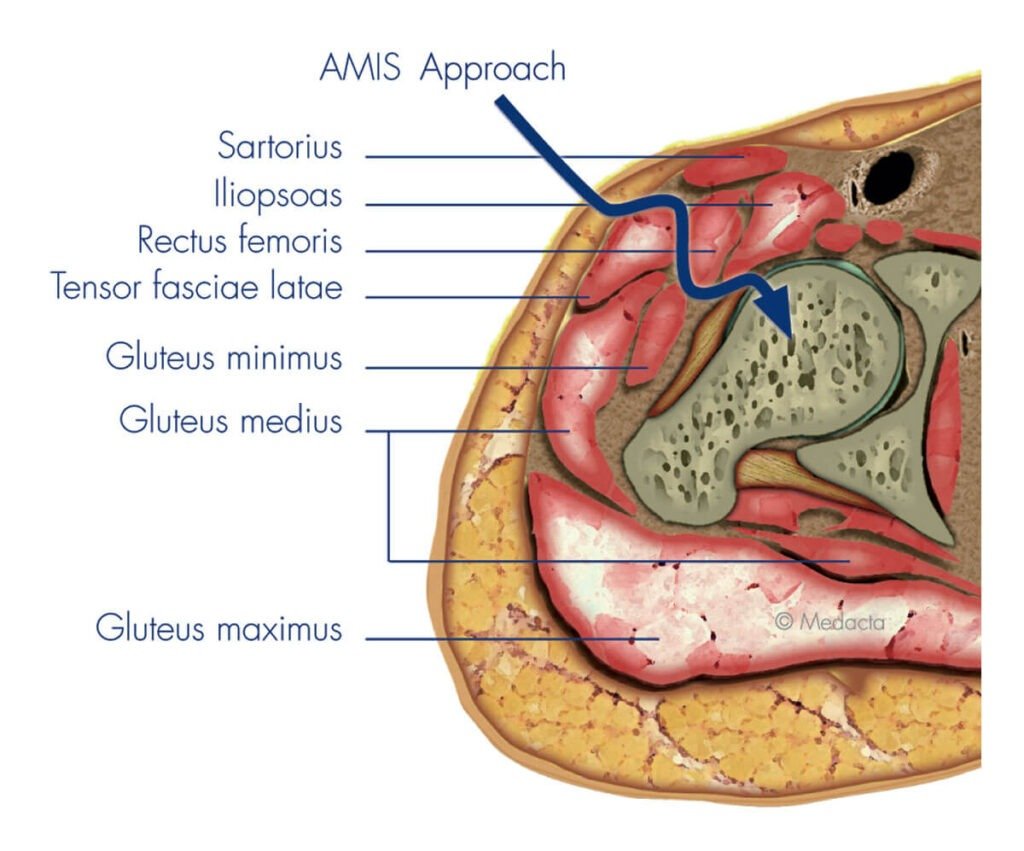
Dr Hockings frequently performs total hip replacement using the anterior approach, which allows access to the joint from the front of the hip. This technique follows a natural path between muscles rather than cutting through them, which may result in less soft tissue trauma during surgery.
Potential benefits of the anterior approach may include:
Dr Hockings has undertaken post-fellowship training in anterior hip replacement and uses this method when it is safe and appropriate for the patient. In suitable cases, it can also be performed using a bikini incision, which follows the natural line of the groin crease.
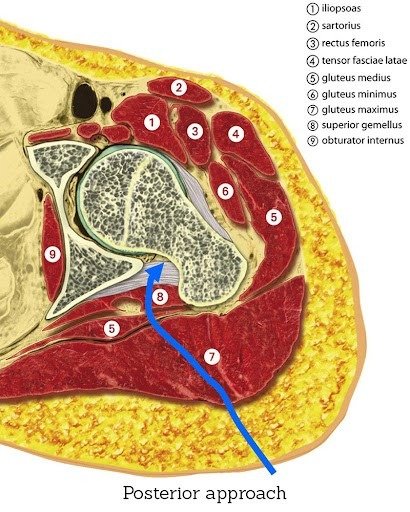
The posterior approach accesses the joint from the back of the hip and remains a well-established and widely used technique. It provides excellent visibility of the joint, which is especially useful when dealing with:
Although the posterior approach involves releasing some muscles and soft tissue, these are repaired during closure. With the right surgical technique and rehabilitation, long-term outcomes remain excellent.
Regardless of the surgical approach used, Dr Hockings focuses on achieving a stable, well-functioning joint. Careful attention is given to:
Your surgical approach will be selected as part of a personalised plan designed to support your recovery and long-term mobility.
Recognising that every hip is different, Dr Hockings incorporates digital imaging and surgical planning tools to measure your anatomy before surgery, plan component sizes, and optimise placement of the implants. This means that, for suitable patients, patient-specific instrumentation (PSI) may be used to tailor the procedure to your exact bone shape and alignment.
In hip replacement surgery, the choice of prosthetic implant plays a vital role in your long-term comfort, mobility, and surgical success. Modern hip implants are highly advanced devices designed to restore the natural movement of the hip, relieve pain, and support your return to an active lifestyle.
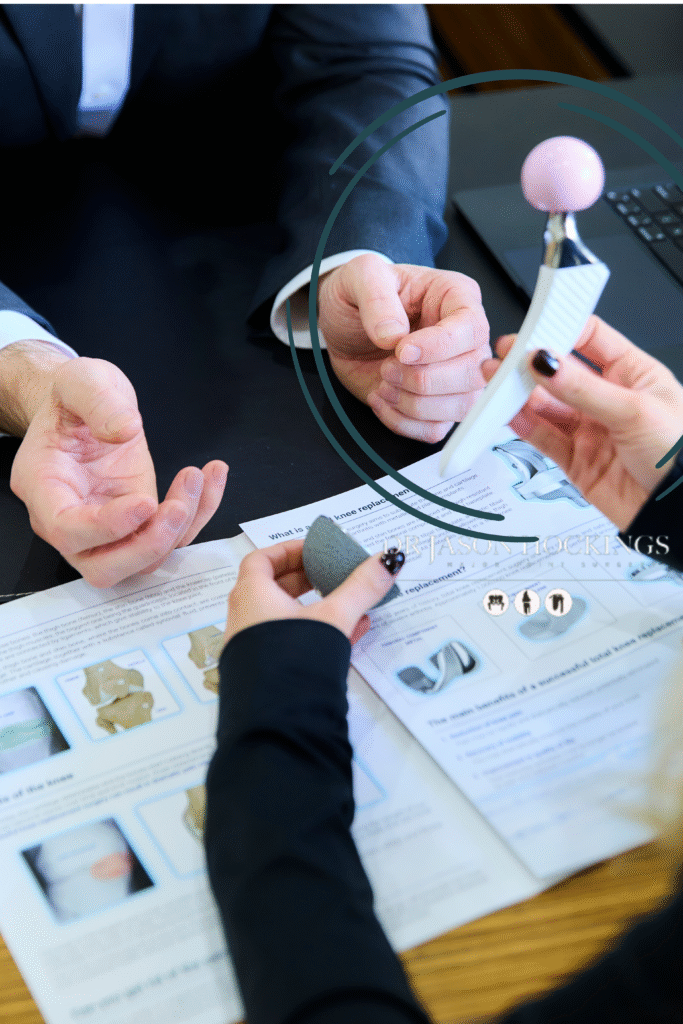
A total hip replacement is made up of three main prosthetic components:
The femoral component, or stem, is the part of your hip replacement that fits inside the thigh bone (femur) to support the new joint. The specific implant selected depends on factors such as your bone quality, the shape of your femur, and your individual surgical plan.
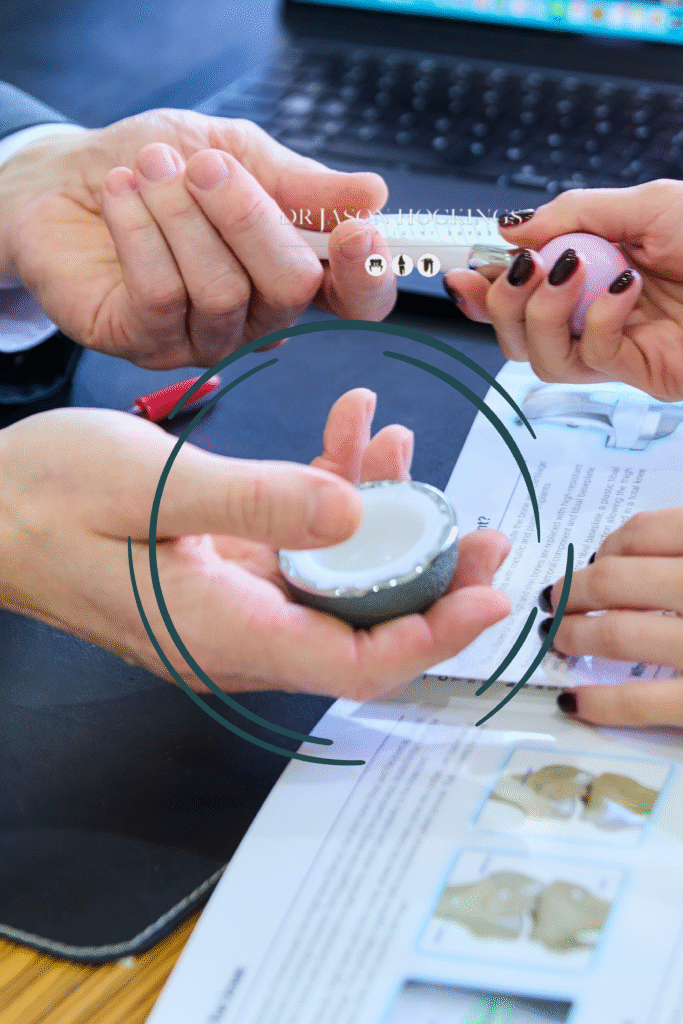
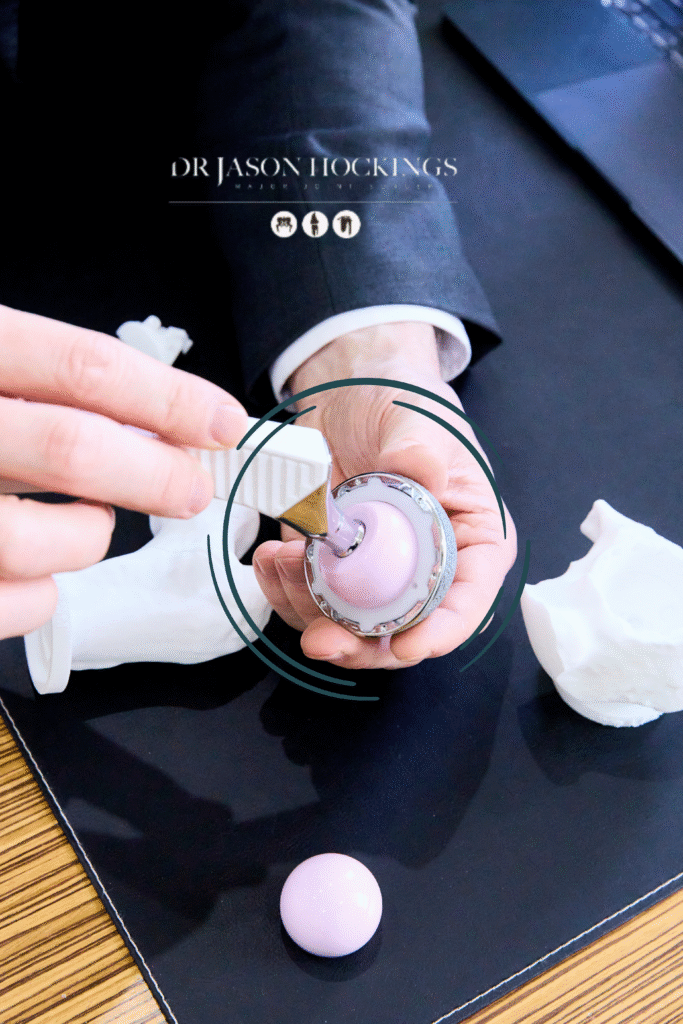
The acetabular component replaces the socket of your hip joint. It usually consists of a titanium shell that fits securely into the pelvis, with a smooth inner liner made from either ceramic or highly cross-linked polyethylene to allow smooth movement of the joint.
The articular interface is the contact point between the femoral head (ball) and the liner within the socket. This surface allows the components to glide smoothly against each other, playing an essential role in joint movement, comfort, and the long-term performance of your hip replacement.
In most total hip replacement procedures, Dr Hockings uses the AMIStem-P Collared Femoral Component, designed to support bone preservation and long-term stability, together with the M-Pact Acetabular Cup system, which provides strong fixation and accommodates individual anatomical variation. These implants are developed by Medacta International, a Swiss orthopaedic company recognised for its evidence based approach to joint replacement innovation. While Dr Hockings frequently uses this combination, he carefully assesses each patient’s anatomy, bone quality, and surgical goals to determine the most appropriate implant configuration.
While total hip replacement is a common and generally safe procedure, like all surgeries, it carries certain risks. Understanding these risks can help you make an informed decision and recognise any signs that may require further attention during your recovery. Dr Hockings will discuss these potential risks with you during your consultation and take every precaution to minimise them.
Some patients may experience persistent pain, limited range of motion, or stiffness despite a successful procedure. Rehabilitation is key to reducing these risks.
A hip replacement relies on the surrounding muscles and soft tissues for stability. In some cases, the new joint may dislocate if the ball comes out of the socket. This risk is higher in the early weeks after surgery while the tissues are healing. You will receive guidance on movements to avoid during your recovery.
Although every effort is made to match your leg lengths, some patients notice a small difference after surgery. This is often due to the need to optimise stability in the hip. If present, it may improve over time or be managed with physiotherapy or shoe inserts if needed.
Hip implants are designed to be durable, but they can wear down or loosen gradually. This often occurs many years after surgery. If the implant becomes worn or loose, further surgery may be required.
The major nerves and blood vessels around the hip are protected throughout surgery, though irritation or injury can occasionally occur. This may lead to numbness, weakness, or altered sensation, which in most cases improves gradually with time.
Rarely, small fractures of the bone around the implant may occur during or after surgery. These are more common in people with weaker bone quality. If this happens, additional fixation or a change in rehabilitation may be required.
Modern hip replacements use materials designed for long-term function. Very rarely, patients may develop reactions to wear particles, inflammation, or local tissue changes. Monitoring and follow-up appointments are important to detect these changes early.
Dr Hockings will take steps to minimise your surgical risk, including enhanced recovery protocols, prophylactic antibiotics, and blood clot prevention measures.
Most people notice a significant decrease in hip pain once the damaged joint surfaces have been replaced. By removing the worn cartilage and arthritic bone, the procedure aims to relieve the discomfort that has been affecting your daily life.
As the new prosthetic components create a smoother joint surface, you may experience better mobility and a more natural range of motion. Simple tasks such as walking, standing, and bending often become easier as healing progresses.
With a more stable and functional hip joint, many individuals find it easier to perform everyday tasks such as getting dressed, climbing stairs, or moving around the home. This can lead to a noticeable improvement in day-to-day comfort and confidence.
Hip pain and stiffness can limit your ability to participate in activities you enjoy. After recovery, many people are able to return to a more active and independent lifestyle, with fewer restrictions on movement.
Modern hip implants are designed to provide durable results. While individual outcomes vary, many prosthetic hips function well for decades, helping people maintain activity levels and long-term comfort.
After completing rehabilitation, many patients return to low-impact recreational activities such as walking, swimming, cycling, golfing, and doubles tennis. These activities may help maintain fitness and joint strength without placing excessive load on the new hip.
A total hip replacement may offer meaningful improvements in comfort and mobility for many people living with severe hip arthritis. Dr Hockings will discuss the potential benefits and the expected recovery timeline so you can make an informed decision that feels right for your situation.
If you and Dr Jason Hockings decide that total hip replacement surgery is the right option for you, it’s natural to want to understand what the process involves. This step-by-step guide outlines what to expect from your initial consultation through to surgery and recovery, using Dr Hockings’ advanced, patient-specific approach. Every aspect of your care, from pre-operative planning to rehabilitation is tailored to your individual anatomy, lifestyle, and recovery goals to help you achieve the best possible outcome.
Step 1.

Your journey begins with a referral from your GP or another medical specialist. This referral is required to book your first appointment with Dr Jason Hockings and ensures you receive the applicable Medicare rebate.
At your initial consultation, Dr Hockings will take a detailed medical history, review any previous imaging, and perform a clinical assessment of your hip. He’ll discuss your symptoms, lifestyle goals, and the non-surgical and surgical treatment options available. This appointment is also an opportunity for you to ask questions and gain a clear understanding of the procedure, recovery process, and expected outcomes.
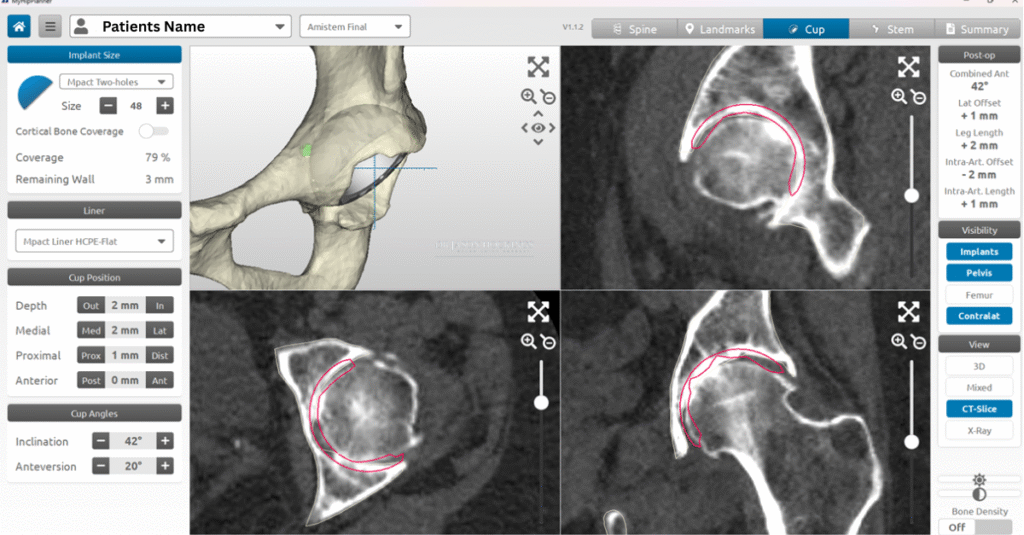
If total hip replacement is considered the most appropriate treatment, Dr Hockings will organise further diagnostic imaging to assist with surgical planning. You’ll be referred for a CT scan, which is used to create a 3D model of your hip using MyHip software for precise, patient-specific planning. Additional tests such as X-rays, blood tests, and general health checks may also be arranged as needed.
Once all results are reviewed, Dr Hockings will explain the surgical procedure in detail, including the potential benefits, risks, and expected recovery milestones. When you feel confident and fully informed, you’ll complete the surgical consent form. You’ll also receive personalised advice on preparing your home and arranging any support you may need during your recovery period.
Step 2.
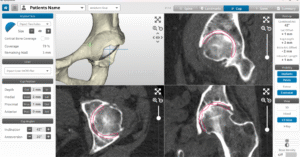
Once your CT scan has been completed, Dr Jason Hockings will use the data to develop a personalised 3D surgical plan using MyHip digital planning software. This system allows him to visualise your hip joint in three dimensions and assess your bone shape, joint orientation, and surrounding anatomy with precision.
Using this model, Dr Hockings can plan the size, position, and alignment of each implant component before surgery. This planning helps guide leg length, joint stability, and muscle balance while minimising the need for adjustments during the procedure.
Step 3.

In the weeks leading up to surgery, you’ll receive guidance and support from Dr Hockings and his team to help you prepare physically and practically for your procedure. This preparation phase is important for achieving a smooth recovery and ensuring your surgery proceeds safely.
You may also be asked to attend a pre-admission clinic or health assessment, which may include a review by your anaesthetist and the hospital nursing team. During this visit, your medical history, current medications, allergies, and recent test results will be carefully reviewed to ensure you are ready for surgery.
Dr Hockings may also provide advice on:
You’ll also receive a pre-surgery information pack from the hospital and Dr Hockings’ team, which includes:
These steps are designed to ensure you feel confident, informed, and well prepared before your operation.
Step 4.

Before your procedure, you’ll have a pre-operative consultation with the anaesthetic team, usually conducted over the phone. During this conversation, the anaesthetist will review your medical history, current medications, and any previous experiences with anaesthesia. This is an important step in ensuring your safety and comfort during surgery. Together, you’ll discuss the two main types of anaesthesia used in hip replacement surgery; spinal anaesthesia and general anaesthesia and determine which is most appropriate for you.
The anaesthetist will explain the risks and benefits of each option and answer any questions you may have. Their goal is to create a personalised anaesthetic plan that prioritises your comfort, supports a smooth surgical experience, and promotes a safe recovery.
Step 5.

On the day of your surgery, you’ll be admitted to hospital and greeted by the nursing and anaesthetic teams, who will guide you through the pre-operative process.
Before your procedure:
The operating theatre team will then escort you into theatre, where your procedure will be performed in a carefully controlled, sterile environment. Throughout the operation, your anaesthetic and surgical teams will monitor your comfort and safety closely.
Step 6.
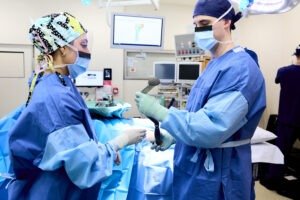
Surgical incision: Once the anaesthetic has taken effect, Dr Hockings makes a small incision at the front of your hip, usually near the natural crease of the upper thigh. In selected patients, a bikini incision may be used. This involves placing the incision within the natural skin crease to improve cosmetic appearance while still allowing safe access to the hip. The length of the incision varies depending on your body shape and the surgical exposure required but is kept as small as safely possible to allow accurate placement of the components.
Accessing the hip joint: Through the incision, Dr Hockings works between the muscles rather than cutting through them. This muscle-sparing approach is one of the key features of the anterior technique and may support more comfortable early movement after surgery. The muscles and soft tissues are gently moved aside to expose the hip joint in a controlled and accurate way.
Removing the damaged hip joint: Using the personalised 3D MyHip surgical plan as a guide, Dr Hockings removes the worn surfaces of your ball-and-socket joint. This includes:
This step is tailored to your unique anatomy to help ensure an accurate fit for the prosthetic components.
Preparing the hip socket: The acetabulum is reshaped and smoothed to create a stable foundation for the new socket component. The MyHip plan helps guide the position, angle, and depth of preparation so the implant sits securely and functions smoothly.
Trial acetabular component placement: A temporary trial cup is positioned in the prepared socket to check alignment, stability, and overall fit. This step allows fine adjustments before the final component is implanted.
Inserting the acetabular cup: Once everything is confirmed, the final cup is inserted into the socket. A liner is then placed inside the cup to create the low-friction surface that allows your new hip to rotate, bend, and move comfortably.
Preparing the femur: The femur is prepared to receive the stem component. Specialised instruments shape the canal inside the thigh bone in line with the 3D plan. A trial stem and trial head are then placed to check leg length, implant angles, soft tissue tension, and overall joint stability.
Inserting the femoral component: Once satisfied with the trial positioning, Dr Hockings inserts the final femoral stem. The design of the stem allows it to sit securely within the bone to provide long-term stability.
Attaching the femoral head: A metal or ceramic head is attached to the top of the stem. This becomes the new ball of the joint and is placed into the previously inserted socket liner, completing the reconstructed ball-and-socket structure.
Final adjustments: Before completing the surgery, Dr Hockings performs detailed checks to ensure:
These checks help support reliable function and comfort after surgery.
Closing the incision: The tissues are gently returned to their natural position, and the incision is closed with dissolvable sutures. A local anaesthetic is applied to the area to help with early pain control. Dissolvable stitches typically soften and break down gradually over several weeks.
The operation generally takes between 1 to 2 hours, although this can vary depending on your individual needs. Most patients stay in hospital for 2 to 4 days, with the exact duration tailored to your recovery progress and overall health.

This step-by-step process is designed to deliver a personalised, precise, and thoughtful surgical experience, restoring function, comfort, and quality of life through advanced hip replacement care.
Here is a general overview of the recovery process:
While you’re in hospital, a physiotherapist will get you moving safely, often on the same day or the morning after surgery. You’ll start with:
Activity Guidelines After Surgery
Physiotherapy to Support Recovery
Physiotherapy plays a vital role in your recovery after hip replacement surgery. It helps restore mobility, build strength, and guide you safely back to everyday activities. Dr Hockings works closely with physiotherapists to tailor your rehab to your needs and surgical approach.
Once discharged, your rehab will continue with either home visits or outpatient sessions. This phase focuses on:
As you gain strength, your physiotherapist will guide you through more advanced exercises to:
Working with a physiotherapist is one of the most important ways to get the best result from your surgery. Dr Hockings and his team will ensure your rehab program supports your recovery every step of the way.
Activity Guidelines After Surgery
By following these recovery guidelines and making positive adjustments to your lifestyle, you’ll give yourself the best chance of enjoying a strong, active, and pain-free future after hip replacement surgery with Dr Hockings.
If your surgery was performed using a posterior approach, the hip joint was accessed from the back, which requires more protection of the posterior structures during healing.
Recovering from total hip replacement is the beginning of a new chapter, one where many people experience improved mobility, greater independence, and reduced discomfort. While Dr Hockings provides the surgical foundation, your commitment to safe movement and regular exercise plays an important role in long-term success.
As your strength improves, low-impact activities such as walking, swimming, cycling, and using an exercise bike are often encouraged. When your physiotherapy team feels it is appropriate, you may also be able to return to recreational activities like golf and doubles tennis, which allow you to stay active without placing excessive load on the new hip.
It is important to reintroduce activities gradually and follow the guidance provided by Dr Hockings and your physiotherapist. Listening to your body, pacing your progress, and maintaining regular movement can support the long-term function of your hip replacement and help you return to the activities you enjoy.
Modern hip implants can last 15–20 years or more. Implant longevity depends on your age, activity level, and how well the joint is looked after.
Younger, more active patients may eventually require a revision hip replacement. Dr Hockings selects implants with a strong long-term track record to help delay or reduce the need for future surgery.
Yes, in some cases. Learn more about Bilateral Hip Replacement
It may allow for quicker early recovery in some patients, but it’s not suitable for everyone. Dr Hockings will assess and explain your options. Learn more about Anterior Approach Hip Replacement Surgery
If you’re experiencing ongoing pain, stiffness, or reduced movement that is affecting your daily activities or quality of life, a thorough orthopaedic assessment can help determine the cause and guide the most appropriate treatment options for your situation.