- SPECIALIST ORTHOPAEDIC SURGEON | MELBOURNE, VIC | ALBURY, NSW | MORNINGTON, VIC |
- 03 9421 6133
- Melbourne & Mornington VIC |
- Albury, NSW
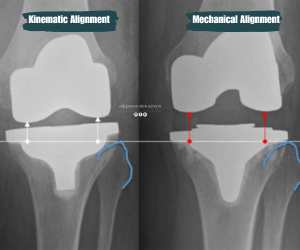
Kinematic alignment total knee replacement is a modern surgical approach designed to restore the natural anatomy and movement of your knee. Unlike traditional techniques that aim to place implants in a standardised mechanical position, kinematic alignment focuses on recreating your individual, pre-arthritic joint function. This technique has gained growing popularity among orthopaedic surgeons and patients seeking a more natural-feeling knee replacement and quicker return to daily activity.
Orthopaedic surgeon Dr Jason Hockings is experienced in using this technique in combination with patient-specific instrumentation (PSI), advanced surgical technologies, and a minimally invasive subvastus approach to support greater precision, faster recovery, and long-term satisfaction.
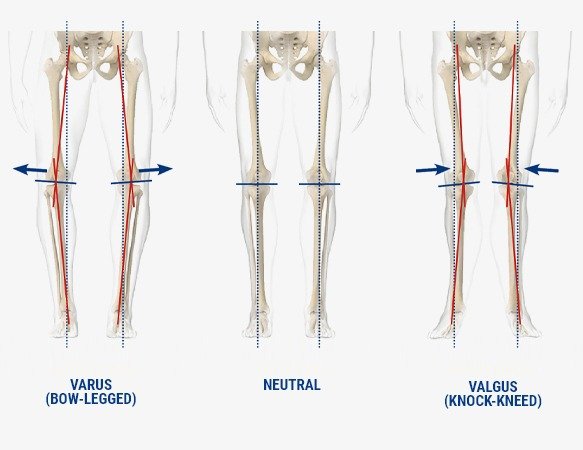
Every person’s knee anatomy is different, with variations in the angles, rotation, and soft tissue balance that govern natural movement. In patients with osteoarthritis, these relationships can become distorted due to cartilage loss, deformity, and compensatory changes in the surrounding structures. Kinematic alignment seeks to restore the patient’s original, pre-arthritic joint orientation rather than forcing the knee into a neutral or “standardised” position. This involves:
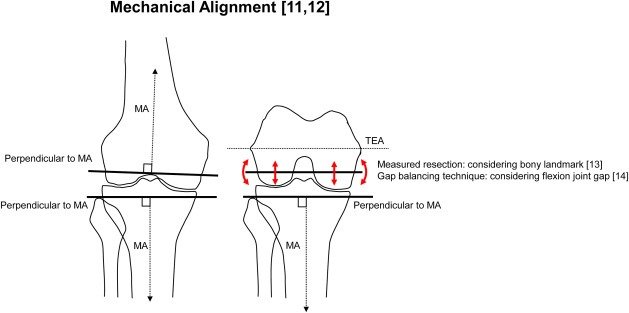
Mechanical alignment is the traditional technique used in knee replacement surgery. It positions the implants to form a straight line from the hip to the knee and down to the ankle, often called a neutral mechanical axis. Although this approach can create a symmetrical leg shape, it does not always reflect a person’s natural anatomy or the way their knee previously moved.
For some people, mechanical alignment may result in uneven ligament tension, a sense of tightness or stiffness, and knee movement that feels less natural after surgery.
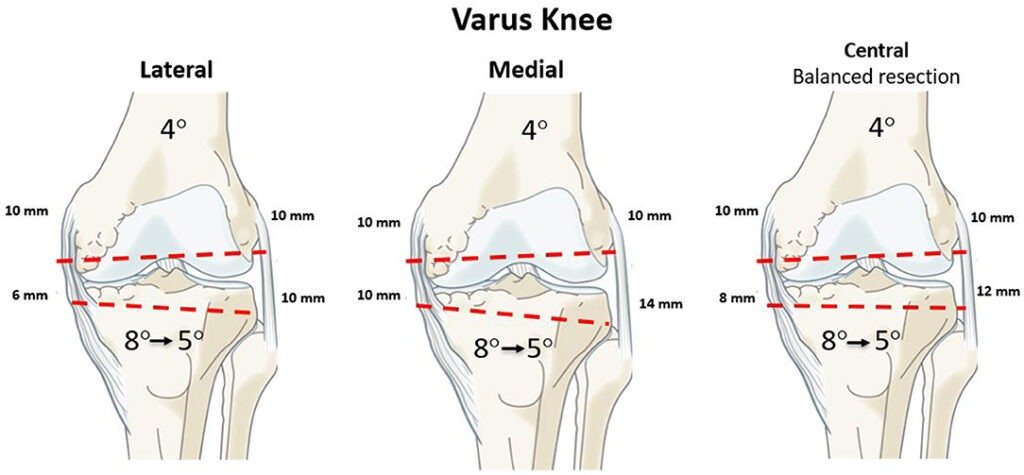
Kinematic alignment aims to restore the natural alignment and joint motion that were unique to your knee before arthritis developed. Instead of creating the same straight alignment for every patient, this technique works with your individual anatomy by respecting your original joint lines, ligament balance, and bone shape.
Using this approach, Dr Hockings incorporates detailed 3D imaging and surgical planning software to position the implants in a way that more closely reflects your pre-arthritic knee. This planning helps reduce the need for soft tissue releases and supports the natural pivot and glide of the joint.
The goal of kinematic alignment is to help the knee move in a way that feels closer to its natural pattern, which may support a smoother and more familiar walking style during recovery. While individual outcomes vary, kinematic alignment provides a more personalised approach compared with traditional mechanical alignment.
| Alignment Method | Mechanical Alignment | Kinematic Alignment |
|---|---|---|
|
Goal |
Standardise the joint to a neutral axis |
Restore original, pre-arthritic joint motion |
|
Bone Cuts |
Based on generic angles and alignment lines |
Based on individual patient’s anatomy |
|
Soft Tissue Balance |
Ligaments often need to be released |
Preserves natural soft tissue tension
|
|
Feel of the Joint |
May feel more artificial or constrained |
Aims for a more natural-feeling knee |
|
Suitability |
Long-established method for all knee types |
Suited to many patients, but not all cases |
Advanced tools such as Augmented Reality (NextAR) or robotic-assisted technology may also be used in appropriate cases to further enhance surgical accuracy and real-time feedback.

If you’re experiencing ongoing pain, stiffness, or reduced movement that is affecting your daily activities or quality of life, a thorough orthopaedic assessment can help determine the cause and guide the most appropriate treatment options for your situation.