- SPECIALIST ORTHOPAEDIC SURGEON | MELBOURNE, VIC | ALBURY, NSW | MORNINGTON, VIC |
- 03 9421 6133
- Melbourne & Mornington VIC |
- Albury, NSW
A full-thickness tear occurs when the gluteus medius or minimus tendon is completely detached from its insertion on the greater trochanter. These tears may produce significant weakness, limping, difficulty standing on one leg and persistent lateral hip pain.
TOPAZ tenoplasty cannot reconnect a completely detached tendon.
Some smaller full-thickness tears can be repaired endoscopically. However, an open gluteal tendon repair may be recommended when a tear is large, substantially retracted, chronic, associated with poor-quality tissue or muscle wasting, or cannot be mobilised and repaired reliably through an endoscopic approach.
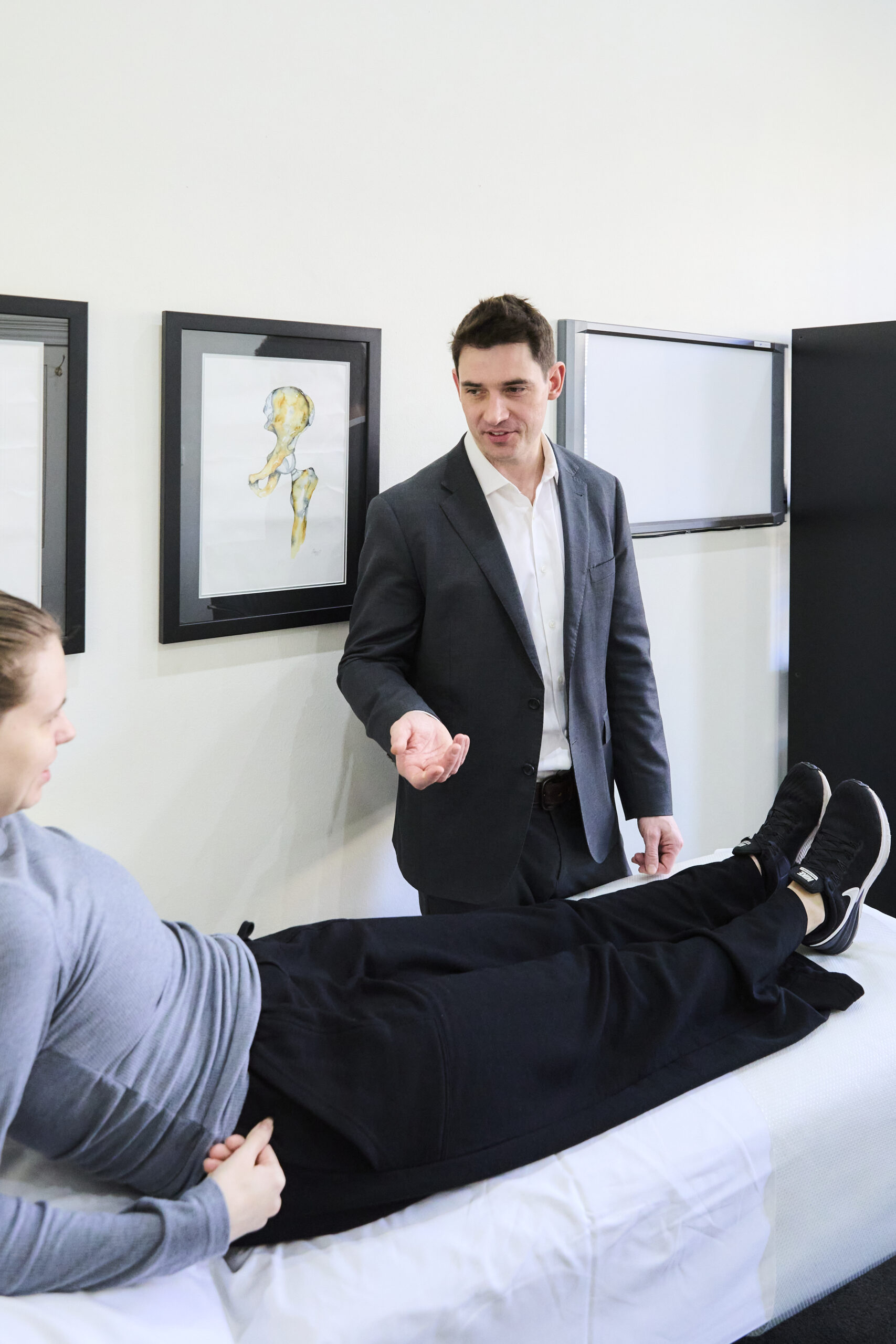
Most gluteal tendon tears can be repaired directly back to the greater trochanter using the patient’s own tendon. However, augmentation may be required when the tear is large or chronic, the tendon is substantially retracted, the tissue is thin or poor quality, a previous repair has failed, or the tendon cannot reach the bone securely without excessive tension.
In these circumstances, Dr Hockings may reinforce the repair with a synthetic patch or donor tendon tissue called an allograft. The graft may be placed over the
repair to provide additional support or used to bridge or reconstruct a tissue gap. The choice depends on the tear pattern, tendon quality and findings at surgery, so the need for augmentation can sometimes only be confirmed during the operation.
Augmentation is not required routinely and does not guarantee that the tendon will heal. Published evidence is still developing. If it may be relevant, Dr Hockings will discuss the intended benefit, alternatives and additional considerations associated with synthetic material or donor tissue before surgery.
Recovery after a full-thickness tendon repair is more protective than recovery after an isolated bursectomy or IT band lengthening. Crutches and restrictions on active hip abduction are commonly required while the tendon heals. Rehabilitation is progressed gradually over several months.
Dr Hockings will review the MRI findings, muscle quality and degree of tendon retraction before recommending an endoscopic or open procedure.
If pain over the outside of your hip is affecting sleep, walking or daily activity despite appropriate treatment, a detailed assessment can help clarify whether the problem arises from the bursa, gluteal tendons, iliotibial band, hip joint, lower back or another structure.
Treatment recommendations are tailored to the diagnosis, previous treatment and individual goals.
Contact Dr Jason Hockings
reception@drjasonhockings.com.au
(03) 9421 6133
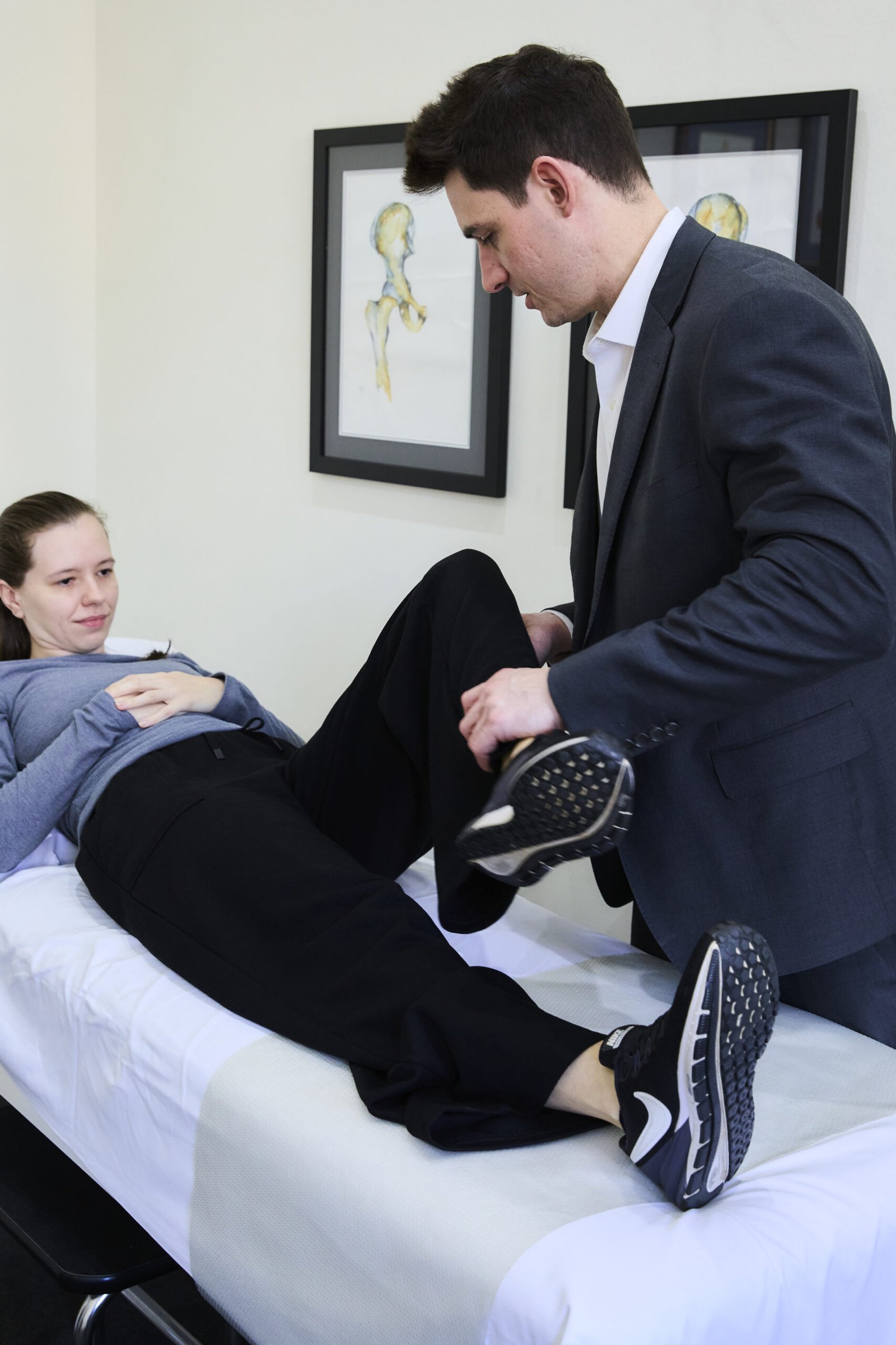
If you’re experiencing ongoing pain, stiffness, or reduced movement that is affecting your daily activities or quality of life, a thorough orthopaedic assessment can help determine the cause and guide the most appropriate treatment options for your situation.