Revision Knee Replacement Surgery

Addressing complications or failure after a primary knee replacement

If you’ve previously had a knee replacement but are now experiencing pain, stiffness, instability, or other complications, revision knee replacement surgery may be necessary to restore joint function and improve your quality of life. This page explains what revision knee replacement involves, why some knee replacements may become painful or fail over time, and what you can expect from the assessment, surgery, and recovery process. You’ll also learn about the signs that may indicate a problem with your current implant, the surgical options available, and how Dr Jason Hockings approaches complex revision procedures with precision and personalised care.
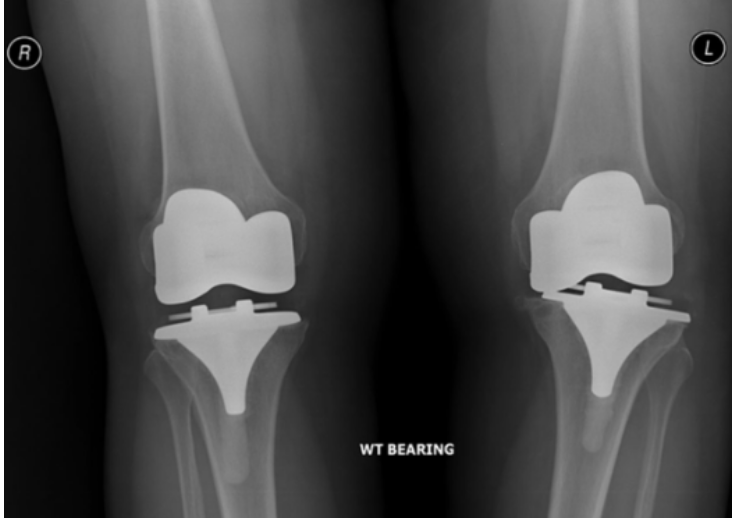
In Australia, registry data indicate that approximately 4 to 5 % of primary total knee replacements require revision surgery within ten years.

How radiofrequency ablation works

Radiofrequency ablation (RFA) works by disrupting the sensory nerve pathways that transmit pain signals from the knee joint to the brain. The procedure specifically targets the genicular nerves, which are responsible for carrying pain messages from within the knee. Because these nerves are the focus of treatment, the procedure is also known as genicular nerve ablation.

In individuals with knee osteoarthritis, these sensory nerves can become overactive due to ongoing inflammation, cartilage wear, and changes in joint mechanics. This can result in persistent, hard-to-manage pain, even after trying physiotherapy, medications, or injections.

During the procedure, Dr Hockings uses real-time imaging (typically X-ray or ultrasound) to guide the placement of a thin, needle-like probe near the genicular nerves. Once accurately positioned, the tip of the probe delivers a controlled dose of radiofrequency energy, which generates heat to create a small lesion on the nerve. This temporarily interrupts the nerve’s ability to transmit pain signals.

Importantly, RFA does not change the structure of the joint itself. Instead, it helps reduce pain perception, allowing for improved mobility, greater comfort, and the ability to participate more easily in daily activities, all without the need for incisions, stitches, or surgical recovery.
250716 drjasonhockings 2m9a9637

Understanding revision knee replacement surgery

Most knee replacements provide many years of pain relief and improved mobility however, in some cases, a knee replacement may become painful, unstable, or worn over time. When this happens, revision knee replacement surgery may be recommended.

Revision knee replacement is a specialised procedure that involves removing part or all of the original knee implant and replacing it with new components. Depending on the condition of the joint and surrounding bone, the surgery may also involve rebuilding damaged bone with grafts, using metal augments, or implanting more stabilised prostheses.

Unlike a first-time (primary) knee replacement, revision surgery is more complex. It may take longer to perform, and the recovery process can be more involved. The goal is to restore function, improve stability, and reduce pain, particularly when symptoms from a failing implant begin to affect your daily activities and quality of life.

Revision knee replacement surgery is typically considered when:

Dr Jason Hockings has a special interest in managing complex knee conditions, including revision procedures. If your previous knee replacement has not met expectations, he can conduct a thorough assessment to determine whether revision surgery may be appropriate and provide a clear treatment plan based on your individual situation.
Why a knee implant might fail

While most knee replacements function well for many years, a small percentage may develop problems over time. Understanding why a knee implant might fail can help guide timely intervention and ensure the best outcome if revision surgery is needed.
Some of the most common reasons for knee implant failure include:
Dr Hockings uses detailed imaging and clinical assessment to investigate the specific cause of your knee symptoms. When appropriate, he works closely with infectious disease physicians, radiologists, and other specialists to plan a personalised and comprehensive revision strategy.

Recognising the symptoms of a failing knee replacement

If you’ve previously undergone total knee replacement surgery and are now experiencing discomfort or reduced function, it’s important not to dismiss these symptoms as simply part of ageing. While some stiffness and minor aches can be expected during recovery or with long-term use, certain signs may indicate that your implant is not functioning as it should.
Key symptoms to watch for include:
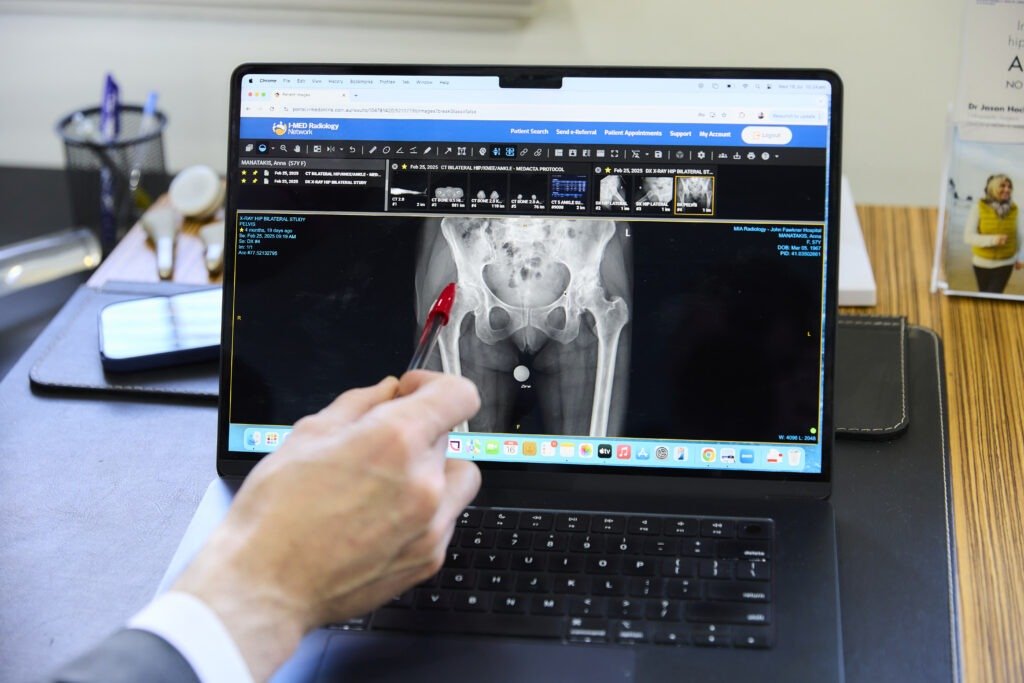
If you’re experiencing any of these symptoms, it’s important to have your knee assessed promptly. Dr Hockings will conduct a thorough review, including physical examination, imaging studies, and, if needed, blood tests to determine the cause of your symptoms and whether revision surgery should be considered.

When is revision knee replacement surgery recommended?

Revision knee replacement surgery is typically considered when the original (primary) knee replacement is no longer functioning effectively or is causing significant pain, instability, or limitation in mobility. Not all knee pain after joint replacement is caused by implant failure however, as there may be other treatable causes such as inflammation, scar tissue, referred pain from the hip or spine, or soft tissue irritation.

Before recommending revision surgery, Dr Hockings will conduct a thorough assessment to confirm whether your symptoms are truly related to the implant. This includes:
Revision surgery may be recommended if you have:
  • Confirmed implant loosening or wear
  • Chronic or recurring infection around the joint
  • Ongoing pain despite appropriate rehabilitation
  • Mechanical failure or fracture of components
  • Progressive instability or joint dislocation
  • Significant stiffness or loss of motion
  • Bone loss around the implant (osteolysis)

Dr Hockings will only recommend revision surgery when non-operative options are no longer appropriate, and when imaging or testing confirms that the implant is contributing to your symptoms. His approach is tailored to your individual needs and guided by a careful review of the risks, expected outcomes, and your overall health status.

Modern implants & revision knee replacement

Revision knee replacement surgery often involves more than simply exchanging old components for new ones. Over time, changes in bone quality, soft tissues, or ligament support may make standard implants inadequate. Modern revision implant systems are specially designed to address these complexities, offering improved support, alignment correction, and durability.

Whereas a primary knee replacement typically uses standard-sized components, revision implants come in a broader range of configurations to account for bone loss, ligament damage, or joint instability. Dr Hockings uses advanced revision implant systems tailored to your anatomy, surgical history, and functional needs.
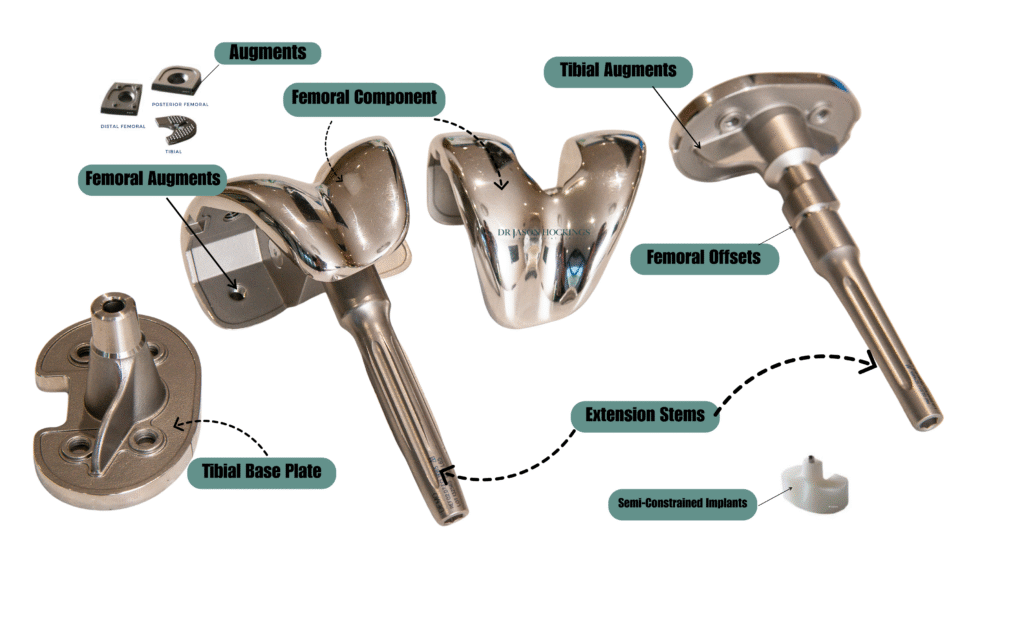
Common components used in revision knee replacement include:

Dr Hockings is experienced in selecting and positioning these components based on detailed imaging and preoperative planning. Every revision case is different, and his tailored approach ensures that the most appropriate combination of implants is used to restore comfort, stability, and joint function as effectively as possible.

Revision knee replacement surgical approaches

Revision knee replacement surgery is inherently more complex than primary knee replacement. Each case is different, often involving varying degrees of scar tissue, bone loss, instability, or misalignment. Dr Hockings adopts a highly tailored approach to each revision procedure, carefully planning the surgery based on your medical history, imaging, and the condition of your current implant.
Key surgical considerations include:

One-stage vs two-stage procedures

Depending on your specific condition:

Operative time and complexity

Revision procedures typically take longer than primary replacements, usually 2 to 3 hours, and involve more intricate planning and surgical execution. Each procedure is tailored to the individual, aiming to restore comfort, function, and long-term implant success.

How personalised surgical guides and digital planning support precision in complex procedures

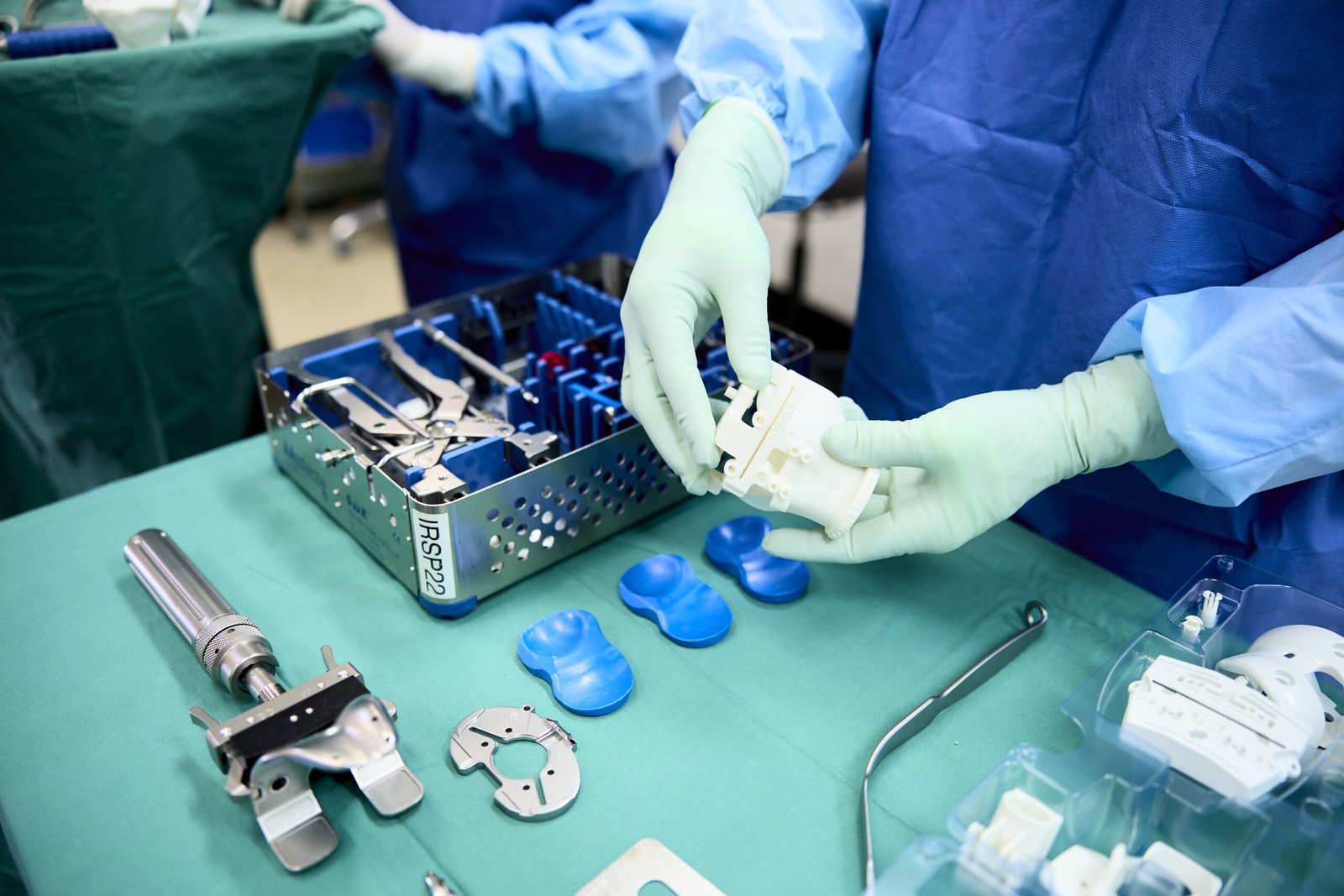
Revision knee replacement is a technically demanding procedure, often involving anatomical distortion, bone loss, or implant malalignment from previous surgery. To support surgical precision in these more complex cases, Dr Jason Hockings uses advanced 3D planning technology, a patient-specific system that helps optimise component positioning, alignment, and implant fixation. This technology begins with detailed CT imaging of your knee and surrounding bone. These images are used to create a personalised 3D model of your anatomy. 
Dr Hockings uses this model to digitally plan your revision procedure in advance, ensuring that:
These patient-matched surgical guides are then used in theatre to support accurate bone preparation and implant placement, reducing the risk of error and supporting a more reproducible outcome. In revision surgery, where precision is critical due to bone loss, scarring, or altered joint mechanics, this level of customisation helps improve:
By incorporating modern tools like advanced 3D planning technology, Dr Hockings offers a tailored surgical plan that reflects both the complexity of revision surgery and the need for long-term durability and joint function.

YOUR REVISION KNEE REPLACEMENT JOURNEY WITH DR JASON HOCKINGS: STEP BY STEP

Revision knee replacement is a highly individualised and technically complex procedure and Dr Jason Hockings is committed to providing personalised care, with a clear and structured plan to guide you through every stage of your journey. From your initial consultation and diagnostic assessment through to surgery, rehabilitation, and long-term follow-up, each step is designed to support your safety, comfort, and confidence. Whether you’re experiencing implant failure, pain, stiffness, or infection, Dr Hockings will develop a tailored surgical and recovery pathway to meet your specific needs and goals.

Step 1

1. PRE-OPERATIVE ASSESSMENT & INVESTIGATIONS

Before proceeding with revision surgery, it’s crucial to determine the underlying cause of your symptoms and assess your overall health.

Key investigations may include:

  • Routine pre-surgical tests: Blood tests, ECG, chest x-ray, and anaesthetic review (as per any major surgery)
  • Tests to exclude infection:
    • ESR (Erythrocyte Sedimentation Rate)
    • CRP (C-Reactive Protein)
    • Knee aspiration (a fluid sample taken from the joint under sterile conditions)
  • Specialised imaging:
    • X-rays (including long-leg alignment views)
    • CT scan (to assess implant positioning or bone loss)
    • MRI scan (occasionally used to assess soft tissue structures)

You will also be assessed by a general medical specialist to ensure you are medically fit for surgery. This allows time to manage any other health issues that may increase the risk of complications. Your anaesthetist will discuss the best anaesthesia approach and postoperative pain relief options tailored to your needs.

Step 2

2. SURGICAL PROCEDURE: NON-INFECTED REVISION

If your revision surgery is not related to infection, the procedure is typically performed in a single stage:

  • Surgery is done under spinal and/or general anaesthetic
  • The original incision is used to access the joint, and scar tissue is carefully removed
  • The existing implant is removed using precision tools, preserving as much bone as possible
  • Specimens are sent to confirm that no underlying infection is present
  • The joint surfaces are cleaned thoroughly, and all residual cement is removed
  • The new prosthesis is placed:
    • Augments and metal wedges are used to fill any bone defects
    • Stems anchor the new implant components securely into the femoral and tibial canals
    • The joint is thoroughly irrigated and closed

Step 3

3. SURGICAL PROCEDURE: INFECTED REVISION (TWO-STAGE APPROACH)

If infection is present, a two-stage revision is recommended.

Stage One: Infection control

  • Under spinal and/or general anaesthetic, the old implant is removed
  • The joint is meticulously debrided (cleaned), and all infected material is taken out
  • An antibiotic spacer (temporary implant made of antibiotic-impregnated cement) is inserted
  • This spacer allows partial mobility and delivers high local concentrations of antibiotics
  • You will begin 6 weeks of intravenous antibiotics to eradicate the infection
  • Once inflammatory markers (ESR and CRP) normalise and remain stable off antibiotics, the second stage is scheduled

Stage Two: Definitive implant placement

  • The spacer is removed
  • Specimens are again taken to confirm the infection has cleared
  • The new implant is inserted using the same principles as the non-infected revision
  • Augments, wedges, and stems are used to ensure stable fixation and joint alignment

Step 4

4. IMMEDIATE POSTOPERATIVE CARE

  • Most patients spend 3–5 days in hospital
  • Pain is managed using multimodal strategies tailored by your anaesthetic team
  • You’ll be encouraged to begin gentle physiotherapy early
  • Dr Hockings’ team will help with mobility aids such as walkers or crutches

Step 5

5. RECOVERY & FOLLOW-UP

Recovery after revision knee replacement is generally longer than a primary knee replacement. Dr Hockings provides a structured follow-up schedule to track your healing:

2 weeks

  • Dressings removed and wound assessed
  • Sutures removed
  • If biopsy samples were taken, results are reviewed

8 weeks

  • X-ray (hip to ankle alignment) performed
  • Range of motion assessed
  • A crutch may still be required
  • Reduced reliance on strong pain medication expected

4 months

  • Repeat alignment X-ray may be performed
  • Activities like walking and stairs should feel easier
  • Occasional pain relief may still be needed

12 months

  • Most patients return to comfortable walking and daily activities
  • Final X-ray checks implant position and stability
  • If all is progressing well, this marks the final in-person review
  • Ongoing questionnaires may be sent to monitor long-term outcomes
This structured journey, from pre-operative planning to long-term follow-up helps ensure you feel informed, supported, and confident throughout your revision knee replacement surgery with Dr Jason Hockings.

Understanding the healing process and how it differs from a primary knee replacement

Recovery after a revision knee replacement is generally longer and more complex than recovery following a first-time (primary) knee replacement. This is because the procedure is often more technically demanding, may involve reconstruction of bone or soft tissue, and typically requires the use of more specialised implants.

Hospital stay and immediate post-operative care

Most patients stay in hospital for several days following revision surgery. During this time, Dr Hockings and the hospital team will closely monitor your pain levels, wound healing, mobility, and response to the new implant. Pain management, infection prevention, and early mobilisation are key priorities in the first 48–72 hours.

Hospital stay and immediate post-operative care

Most patients stay in hospital for several days following revision surgery. During this time, Dr Hockings and the hospital team will closely monitor your pain levels, wound healing, mobility, and response to the new implant. Pain management, infection prevention, and early mobilisation are key priorities in the first 48–72 hours.

Weight-bearing and mobility

Depending on the stability of the new implant and whether bone grafts or augments were used, you may be restricted in how much weight you can place on your leg initially. Dr Hockings will provide specific guidance on weight-bearing and activity levels, and physiotherapy will begin early to maintain strength and prevent stiffness.

Physiotherapy and rehabilitation

Ongoing rehabilitation is essential to regain mobility and confidence. You’ll work with a physiotherapist both in hospital and after discharge to gradually improve your range of motion, strengthen surrounding muscles, and relearn safe movement patterns. Recovery timelines may be extended compared to a primary knee replacement, but many patients achieve significant improvements in function and pain reduction over time.

Individualised recovery plan

Because revision surgery varies so much between patients, your recovery plan will be tailored based on the complexity of your procedure, your bone and soft tissue quality, and your personal goals. Dr Hockings and your care team will guide you through this process and help you set realistic expectations for each phase of recovery.

Return to activity

While many patients return to walking, driving, and low-impact activities within a few months, complete recovery can take longer than a primary knee replacement, often up to 6 to 12 months. Some limitations on high-impact sports or repetitive movements may remain, depending on the structural changes made during revision.

Revision knee replacement is a major operation, but with appropriate planning, support, and rehabilitation, it may offer significant improvements in stability, pain relief, and quality of life.
Risks, challenges, and important considerations in revision knee replacement

Revision knee replacement surgery is a more complex and technically demanding procedure than a primary knee replacement. While it can significantly improve pain, mobility, and quality of life for patients with a failed or painful implant, it also carries a higher risk profile and longer recovery period. Understanding these risks and considerations is an important part of making an informed decision.

Higher complexity, higher risks

Because revision surgery often involves removing well-fixed components, dealing with scar tissue, bone loss, or soft tissue damage, the procedure typically takes longer and may require more extensive reconstruction. This increased complexity means there is a greater chance of certain complications, including:

Additional considerations

Dr Jason Hockings will carefully assess your individual situation, discuss the risks that apply to you, and provide a personalised plan to support a safe and successful outcome. Every effort is made to minimise risk through meticulous planning, evidence-based surgical techniques, and a strong focus on your recovery journey.
250716 drjasonhockings 2m9a0770

Why patients are referred to Dr Jason Hockings for revision knee replacement?

Revision knee replacement is among the most complex procedures in orthopaedic surgery. It requires a detailed understanding of why a previous knee replacement may have failed, how joint mechanics have changed over time, and what surgical techniques can best restore comfort and mobility.

Dr Jason Hockings is an experienced orthopaedic surgeon who manages both primary and revision knee replacements. He has extensive experience treating patients with challenging knee problems, including implant loosening, joint instability, infection, and bone loss.
Each revision case is carefully assessed using advanced imaging and digital planning tools to understand the underlying cause and determine the most appropriate treatment strategy. Dr Hockings selects from a range of implant systems, augments, and bone reconstruction techniques to match the specific needs of each individual patient and care is coordinated across a multidisciplinary team that includes anaesthetists, physicians, physiotherapists, and nursing staff.

From your initial assessment through to your recovery, the goal is to provide well-considered, individualised care that supports a safe procedure and a steady return to movement and daily life.
Frequently asked questions about revision knee replacement

Signs that your knee replacement may no longer be functioning properly include ongoing or increasing pain, swelling, stiffness, instability, reduced mobility, or a grinding or clicking sensation. If these symptoms develop months or years after your initial surgery, it’s important to see an orthopaedic surgeon for a detailed assessment.
Revision knee replacement is typically more complex than a primary knee replacement, and recovery can take longer. Some patients report slightly more discomfort early on due to the extent of the surgery, but with modern pain management techniques and physiotherapy support, most patients achieve good relief over time.
Most patients stay in hospital for 3–5 days following revision knee surgery. Your length of stay will depend on your overall health, the complexity of the procedure, and how quickly you can safely mobilise.
While modern revision implants are designed for long-term durability, they are still subject to wear over time. Your age, activity level, bone quality, and general health all influence the lifespan of the revision. Many patients achieve excellent outcomes that last for 10–15 years or longer.
Not all post-operative knee pain is due to implant failure. Sometimes, the cause may be soft tissue irritation, overuse, or unrelated medical conditions. Dr Hockings will perform a detailed review to determine if your symptoms are caused by the implant itself or another issue that might respond to non-surgical care.
If an infection is present, a two-stage revision procedure is typically required. The infected implant is removed, the joint is thoroughly cleaned, and a temporary antibiotic spacer is inserted. After a course of intravenous antibiotics and confirmation that the infection has cleared, a second surgery is performed to insert the new implant.
Recovery timelines vary, but most people with desk-based jobs require 8–12 weeks off. More physically demanding jobs may require a longer recovery period. Dr Hockings will provide tailored guidance based on your individual recovery progress.
Revision knee replacement surgery can be performed in both public and private hospital systems. If you do not have private health insurance, Dr Hockings can discuss potential self-funding options or public hospital referral pathways. The out-of-pocket costs will depend on your health cover, hospital arrangements, and level of surgical complexity.
While revision surgery can significantly reduce pain and improve mobility, it may not provide the same level of movement as a primary knee replacement. The outcome depends on the reason for the revision, your pre-surgery range of motion, and the condition of surrounding soft tissues. Physiotherapy plays a crucial role in helping you regain strength and function.
250716 drjasonhockings 2m9a1109

If you’re experiencing ongoing pain, stiffness, or reduced movement that is affecting your daily activities or quality of life, a thorough orthopaedic assessment can help determine the cause and guide the most appropriate treatment options for your situation.